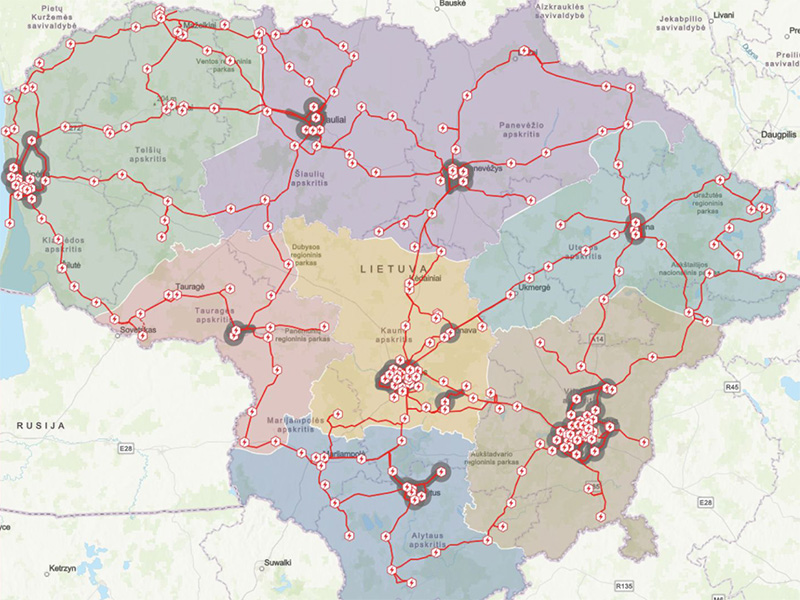

Lithuania’s electricity transmission system operator Litgrid is presenting an energy islands model designed to strengthen the resilience of the country’s power system in emergencies. Under the concept, seven power system regions will be formed in Lithuania, each able to operate temporarily independently of the others. Implementing the model will require 10 new power plants with a combined capacity of 800 MW to be installed at various locations across Lithuania. These will be flexible plants able to respond quickly to system needs and maintain its stability.
“Energy security means not only being able to protect infrastructure, but also being able to function when part of it has already been damaged or is temporarily unavailable. That is why the energy islands model is one of our most important energy resilience projects. Its aim is simple: even in an emergency, individual Lithuanian regions must be able to operate independently and maintain electricity supply to residents, businesses and critical infrastructure,” says Energy Minister Lukas Savickas.
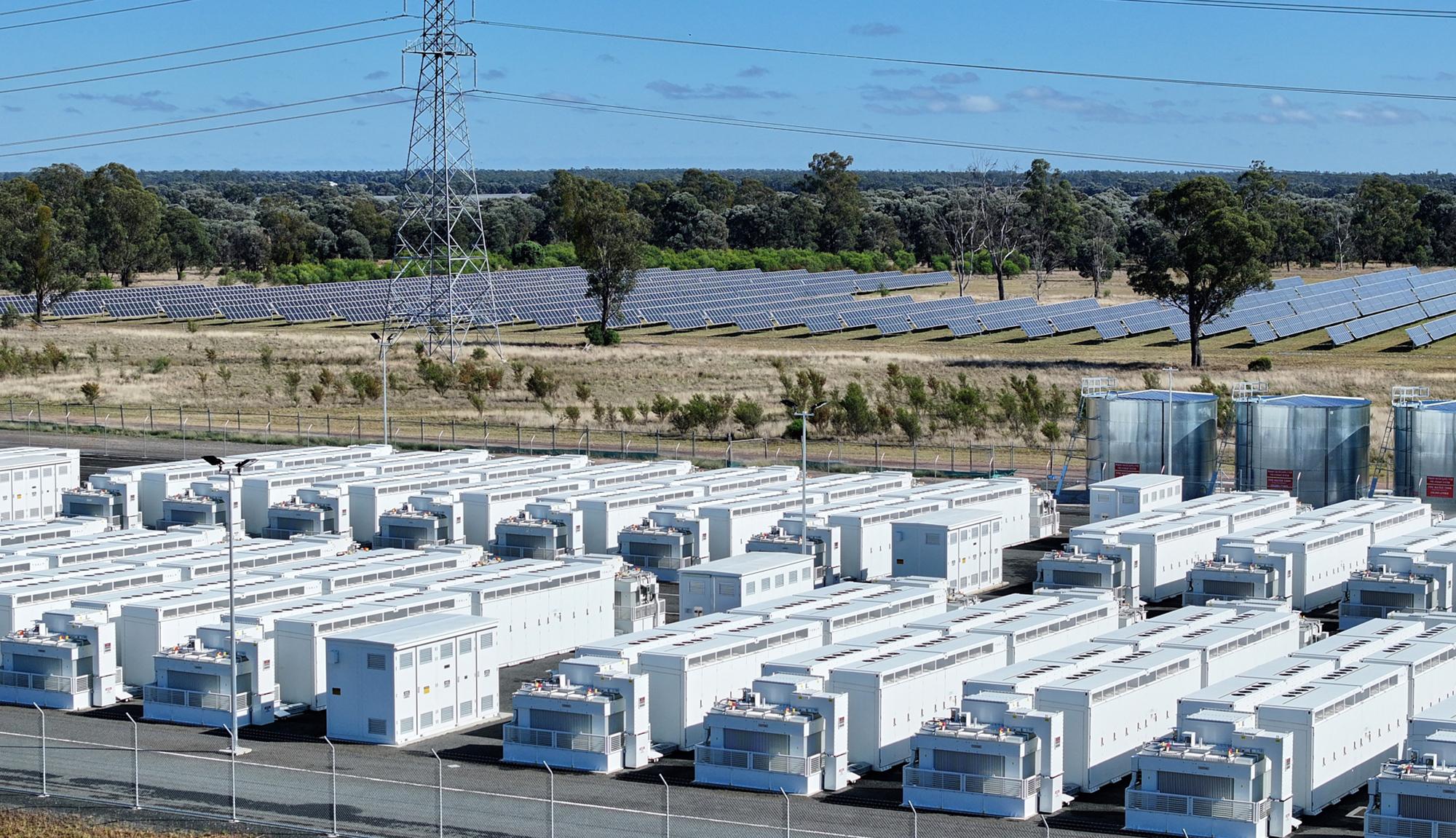
“Energy islands are power system regions that can operate independently when the main 330 kV transmission grid is unavailable. This could happen due to natural disasters, sabotage or other emergencies. We aim to ensure that electricity supply to consumers continues even in the most difficult circumstances. To implement this model, we have drawn up a plan setting out how existing power plants need to be upgraded, how storage batteries will be integrated, and where new flexible generation capacity needs to be installed,” says Litgrid CEO Andrius Šemeškevičius.
Litgrid’s concept for isolated operation services in the Lithuanian power system envisages a system made up of 7 islands which, in an emergency, would operate independently of one another and together cover the whole of Lithuania. The islands are defined according to the structure of the transmission grid and its main grid nodes.
Under the concept, 10 new power plants with a combined capacity of 800 MW will need to be installed in the regions near the main transmission grid nodes. Some existing power plants will also need to be upgraded to improve their ability to maintain supply in an emergency, enabling isolated operation of 4 islands, though not at full scope, as early as 2028.
The new flexible capacity will be procured on a technology-neutral basis with maximum competition. Litgrid will hold service auctions; winning market participants will have 5 years to install new flexible generation capacity and will then provide regional isolated operation services for 15 years.
“The service auction will be technology-neutral, but the plants will have to be capable of providing flexible generation over long periods at any time. The new flexible generation units will also be able to operate in the market, so they will additionally contribute to power system adequacy and help stabilise price spikes during ‘dunkelflaute’ periods. Litgrid developed the islands model taking into account Ukraine’s experience in ensuring power system resilience,” says Litgrid CEO Andrius Šemeškevičius.
Once the currently planned legislative and regulatory changes are approved, the auctions are expected to be announced in 2027, and with the new plants in place, the energy islands model will be fully implemented in 2033.
Litgrid estimates that the need for these new services will add 0.67 ct/kWh to the transmission tariff after 2033, but the new flexible plants will contribute to lower price peaks and lower average wholesale electricity prices.
The energy islands and the planned locations for new flexible generation capacity can be viewed on an interactive map prepared by Litgrid.
Litgrid is launching a public consultation on the isolated operation services concept today, inviting market participants to review the planned service terms and technical requirements and to submit their proposals. The consultation runs until 10 December. A public presentation of the concept to the market is planned for 25 November, and an updated concept is provisionally scheduled for publication in mid-January.
Lessons from Ukraine
Litgrid says plainly that it built the islands model on Ukraine’s experience, and the logic is easy to follow. Four years of Russian strikes have shown how exposed large, centralised assets are. Ukraine’s generating capacity fell from more than 37 GW before the invasion to under 14 GW by the end of 2024. Ukrenergo’s response has been to spread generation across the country instead of concentrating it in a few large plants, using gas peakers, storage and renewables dispersed by region. The IEA reached the same conclusion in its review of Ukraine’s resilience: distributed assets are harder to target and faster to restore. Lithuania’s 10 flexible plants, sited beside the main grid nodes, apply that lesson before a crisis instead of after one.
A Baltic template?
There is no confirmation yet that Latvia or Estonia will follow with regional islands of their own. Estonia already procures island operation capability, but for the country as a whole. Elering set its minimum need for controllable capacity at 1,036 MW for 2026 and signed an agreement with Enefit Power after a public tender. Dividing a national system into self-sufficient regions goes a step further. All three Baltic grids now face the same threats and sit in the same synchronous area, so whether Riga and Tallinn adopt a similar model is the obvious next question. For now, Lithuania is the only one to have put it on paper.