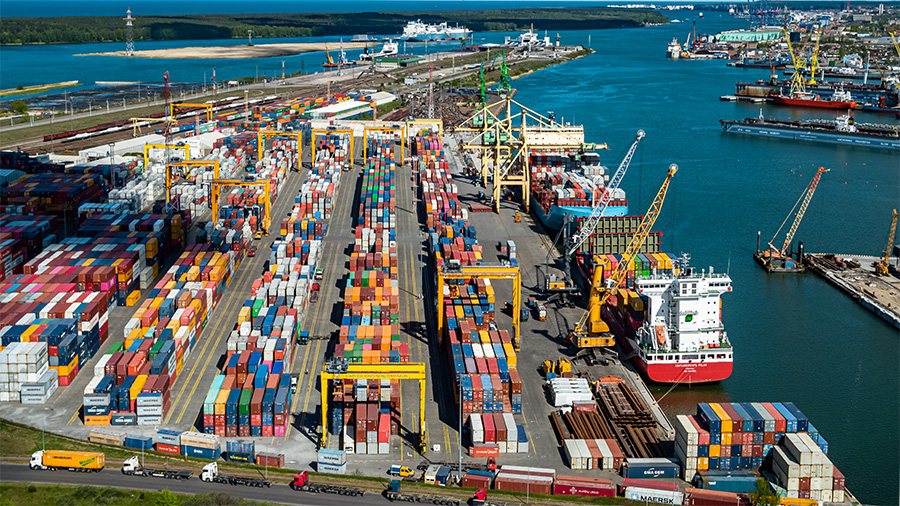

Orlen will finish the deep-conversion upgrade at Mažeikiai only if Orlen Lietuva can pay for it alone. If it can’t, the only oil refinery in the Baltic states may close. “We will go ahead with this modernisation only if Orlen Lietuva is able to finance it,” chief executive Ireneusz Fąfara told PAP Biznes on 3 November. That condition turns a delayed construction project into a decision about whether the region keeps any domestic refining capacity at all.
The numbers behind the warning are stark. Orlen has spent more than $5bn on Mažeikiai since buying it in 2006: about $2.3bn on the acquisition and $2.8bn on modernisation. Over the same period Orlen Lietuva earned roughly $1bn in total. Fąfara puts average annual net profit at about $50m. “Looking at the results of the last twenty years, we can see this investment will never pay back,” he said.
In his account, the refinery has stayed in the portfolio for one reason: it was not generating further losses. Keeping it that way requires the upgrade. Finishing that upgrade, according to unofficial PAP Biznes information, will take another $600–700m. Abandon it, Fąfara warned, and Mažeikiai risks becoming one of the first refineries in the region to shut down.
A project without a builder
The Bottom of the Barrel (BoB) unit is a residue hydrocracker. It is designed to lift the share of high-margin products from 73% of output to more than 86%. Orlen Lietuva has said that once the unit runs, the refinery will process 15–20% less crude while turning out the same volume of products. That is the economic case in a sentence: less crude bought, the same product out, and less of the heavy residue that, by the company’s own account, always sells at a negative margin.
Delivery has been the problem. Orlen Lietuva signed an EPC contract with Petrofac in October 2021 against a €641m budget. By 2023 the project’s total cost had risen 45%, to about €970m. Completion slipped from 2025 to the end of 2026.
In November 2025 Orlen Lietuva terminated the contract, citing persistent delays and missed deadlines. By then Petrofac was in administration and had stopped paying its largely Lithuanian subcontractors. Orlen said the work was around 80% complete. Prime Minister Inga Ruginienė responded that Vilnius expected the search for a replacement “to move quickly to ensure continuity and meet the deadlines.” Orlen Lietuva has since covered about €3m of Petrofac’s debts to subcontractors and is seeking €104m from Petrofac in arbitration.
The picture has darkened since then. In spring, Economy Minister Edvinas Grikšas said Orlen Lietuva had assured officials it would select a new general contractor in April. He also said the government had not yet heard anything about the selection.
By summer, refinery staff told LRT a different story about progress. They said only about half of the new complex had been built, a fresh tender was under way and they hoped to finish by the end of 2029. That sits awkwardly with the 80% figure Orlen gave in November. The remaining bill quoted this week would push the total cost well beyond the €970m budget.
A recovery built on someone else’s misfortune
Orlen Lietuva’s recent results look healthier, but they rest on a narrow base. The company lost about €687m in 2024. It returned to profit in the second half of 2025: $3.5m in the third quarter, against a $659m loss a year earlier. In the fourth quarter it made $75.1m on revenue of $1.435bn, after a $197.1m loss in the same quarter of 2024, with the plant running at almost 86% of capacity.
Look at where the volume went. Fourth-quarter sales rose 81% in Ukraine and 30% in Estonia. Those gains offset falls of 14% in Lithuania and 13% in Poland. Margins across the industry were lifted that quarter as sanctions and Ukrainian drone strikes on Russian infrastructure curbed diesel exports. Analysts warned at the time that the boost was likely to be temporary.
What makes the boost temporary is the plant’s position, which hasn’t changed. Since Russia shut off pipeline supply in 2006, crude has reached Mažeikiai only through the Būtingė sea terminal. Fąfara argues that no other refinery in Europe is so handicapped by its distance from large inland markets, and that this structurally limits what the plant can earn.
None of this is a question of whether Orlen can afford the upgrade. The group reported second-quarter 2026 net profit of PLN 7.7bn and net debt of just 0.10x EBITDA. Fąfara’s point is that the group should not have to cover it.
Vilnius’s side of the ledger
For Lithuania, the stakes are concentrated. By Fąfara’s count, the refinery employs about 1,500 people in Mažeikiai and supports at least 8,000 more at partner companies. He acknowledged the plant’s weight in the regional economy, then drew the line: “the entire Orlen Group cannot keep subsidising it.” Orlen Lietuva has been the country’s largest taxpayer for several years. It also runs the Būtingė crude terminal and the Mockava rail terminal used for product exports.
The state has already engaged. In 2025 the cabinet declared the residue conversion unit a project of strategic importance. Under a March 2025 agreement, Lithuania committed support worth more than 8% of the project cost, about €54m. Set against a $600–700m gap, that contribution looks marginal.
Relations have not been frictionless either. In April 2026, Energy Minister Žygimantas Vaičiūnas said Lithuania could apply a windfall tax to Orlen Lietuva if Poland taxed the parent group’s profits.
The framing of Tuesday’s remarks deserves attention. By asking whether Orlen Lietuva can fund the project without additional financial engagement from the group, Fąfara has put the question of who pays the gap firmly on the table. Lithuania’s government, the subsidiary’s balance sheet and future margins are the remaining candidates.
What happens next
Orlen’s investment committee and internal workshops are due to examine the options in the coming weeks. Those meetings decide between two outcomes: completing the unit, which would extend the refinery’s life by more than a decade, or abandoning it and accepting that Mažeikiai could be among the first refineries in the region to shut.
Fąfara has stood at this junction before. In 2010, as head of Orlen Lietuva, he briefed Lithuania’s prime minister on the refinery’s situation and on Orlen’s plans for it. Orlen had hired Nomura to work out options for its future, which Lithuanian media reported as a possible sale. The refinery survived that review. This time Orlen has published the numbers before the decision rather than after it.