
Rezolv Energy closed the largest renewable project financing in Romania this autumn and energised its first wind capacity in the same week. Its next test is commercial rather than financial, and the public record on its flagship asset, Dama Solar, still leaves open the plant’s final size, its full cost, who buys most of its output and whether it will carry a battery.
Dama Solar: €561m, 14 lenders, construction under way
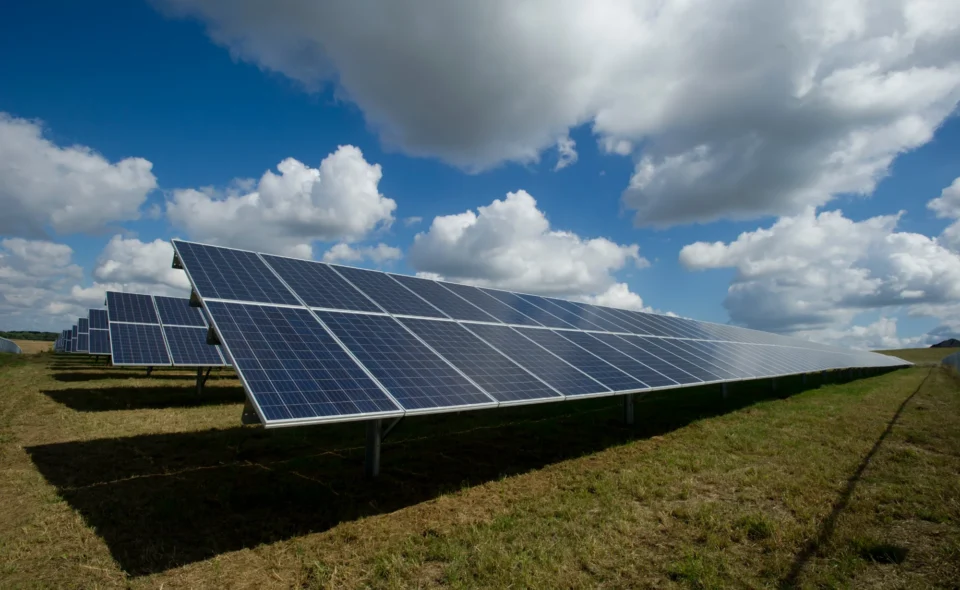
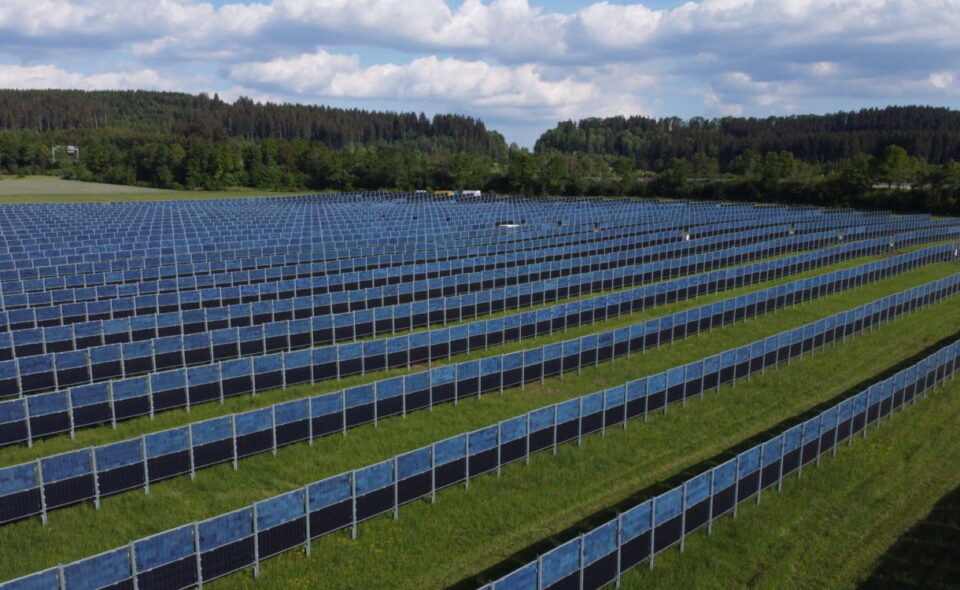
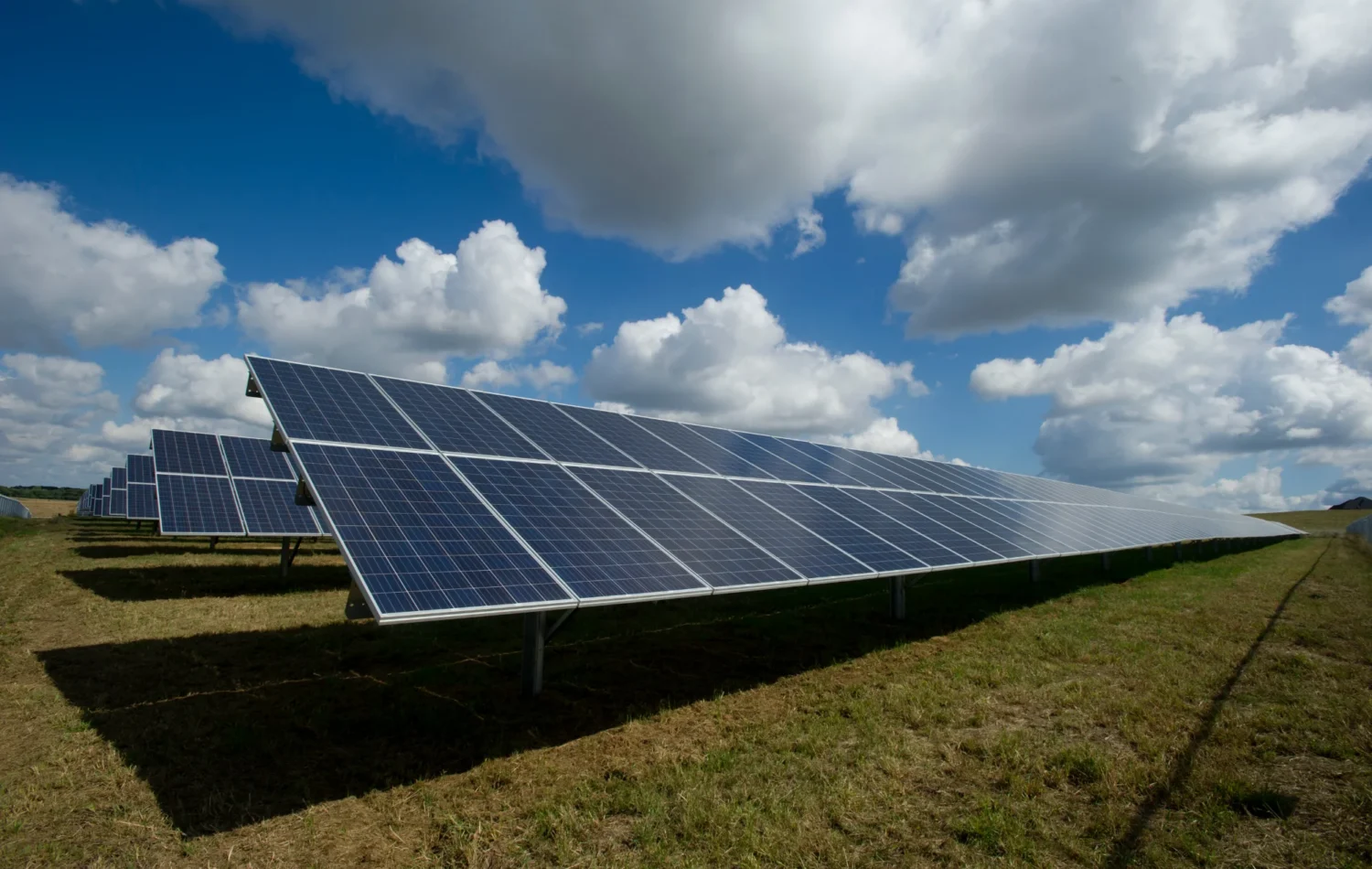
On 30 September Rezolv, through its project company West Power Investments, signed an up to EUR 561 million project financing package for Dama Solar, a 1.3GWp solar project in Arad County, western Romania. The European Investment Bank (EIB) anchored the financing, backed by an InvestEU guarantee. Fourteen lenders committed: 10 commercial banks and three Development Finance Institutions, the EBRD, IFC and Black Sea Trade and Development Bank (BSTDB).
The EIB’s own ticket is €100 million, and the bank puts total investment at €728 million, which puts debt at roughly three-quarters of project cost. The EBRD contributes a €21.1 million senior secured loan and says the plant will be the largest renewable energy installation it has financed to date. Georgios Gkiaouris, Head of Energy Europe at the EBRD, called it a step towards a ‘secure, competitive and low-carbon energy system’.
The financing is structured as a green loan under the 2025 Green Loan Principles, and Moody’s Ratings assigned it a Sustainability Quality Score of SQS1. JP Morgan acted as debt structuring advisor and CMS as legal counsel to Rezolv, with White & Case advising the lenders. Jan Viton, Head of Financing at Rezolv Energy, said the EIB loan played a crucial role in underpinning the wider package, and that the deal was delivered on a very tight timetable.
‘Securing financing of this scale from 14 lenders is a major achievement,’ said Alastair Hammond, CEO of Rezolv Energy.
Commercial operation is due in H2 2028. The site covers more than 1,000 hectares, expected generation is around 1,800 GWh a year, and more than 1,500 jobs are projected during construction. EPC partners are still to be confirmed.
What the Dama Solar record does not yet settle
For a project of this profile, several basic parameters remain unclear in public sources. Each of them affects how the asset’s risk should be read.
Capacity. Dama has grown on paper three times. When Rezolv acquired the Bulgarian St. George project in 2023, it described Dama as 1,044 MW. In August 2026, ANRE issued the setting-up authorisation, and Rezolv said design optimisation and technological advances had lifted installed capacity to 1.2 GW. Six weeks later, the financing documents described it as approximately 1.3GWp. The EBRD describes the plant as over 1.2 GWp, while the EIB’s project summary refers to a PV plant of about 1 GW. The figures are not necessarily in conflict, because peak (DC) capacity, inverter capacity and grid-connection capacity are routinely quoted interchangeably. One Romanian analysis reads the permit as 1.2 GW authorised against 1.07 GW connected. Rezolv has not published a breakdown, and that matters for yield assumptions and for any read-across to the CfD volumes.
Some Romanian outlets reported the August authorisation as covering the first phase of the project. One also cited an operating date of 2030, against the company’s H2 2028. Rezolv’s own statements refer to a single plant reaching commercial operation in 2028.
Cost. The EIB’s summary sheet, released in May 2026, gave an approximate total cost of €674 million. At financial close, the bank put total investment at about €728 million. Both figures are well below the €1 billion that the Grăniceri mayor cited in early 2025, a figure that included €200 million for batteries. The gap between the 2025 figure and the current one is consistent with storage having moved outside the financed scope, but no lender or company statement confirms this.
Offtake. Dama’s contracted revenue rests on two Contracts for Difference from Romania’s second CfD round, covering 520 MW. In that round, winning solar bids ranged from €35.50/MWh to €45.20/MWh, averaging €40.46/MWh against a €73/MWh ceiling. Rezolv’s two bids were 260 MW each, under a 15-year scheme with a fixed strike price. Dama’s own strike price has not been published.
The second contract is a corporate PPA with a premium offtaker, whose identity and volume have not been disclosed. Output outside these arrangements can be sold into the market or placed under further long-term contracts with commercial and industrial buyers. A 2025 report said the plant might supply a large server farm, which neither Rezolv nor any named buyer has confirmed.
On these figures, the CfDs cover 520 MW of a plant marketed at 1.3 GWp. Without the PPA volume, the share of Dama’s 1,800 GWh a year that is contracted cannot be calculated from public information.
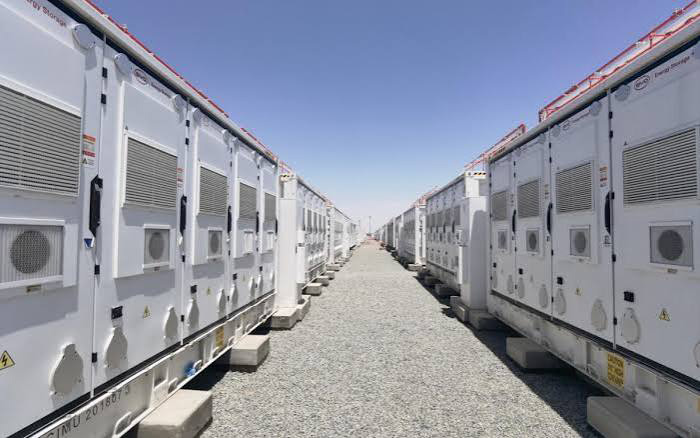
Storage. A battery has been part of the Dama concept since at least 2025, but its size and scope remain unresolved. In April, Marian Pavel, General Manager Romania at Rezolv Energy, told ZF that the company intends to install battery storage across its portfolio, and that Dama Solar is planned to host one of the largest battery systems in Romania. The August permit announcement again referred to a large BESS intended to improve the plant’s flexibility and resilience.
Reported sizes vary widely. In 2025, the Grăniceri mayor cited a 500 MW battery, and Romanian outlets repeated that figure after the August permit. One analysis says the original configuration paired 1.04 GW of solar with a 135 MW battery, and lists whether the final design retains that storage as an open question.
The financing round adds to the uncertainty. Rezolv’s 30 September statement covers the CfDs, the PPA, the lenders and the 2028 date, but does not mention storage. Enerdata’s report on the deal states that the development will incorporate battery storage. ElectricalNews reports, without naming a source, that battery capacity is not part of the currently financed solar project and would be a separate development.
The storage question also bears directly on Dama’s market exposure. In early March, record solar output in Romania covered about a third of instantaneous demand and pushed day-ahead prices negative for the first time this year. Bogdan Ivan, Romania’s Minister of Energy, has signalled the policy response: ‘We will now invest in storage in order to respond to price fluctuations.’ Any part of Dama’s output that is neither under CfD nor under PPA will be priced in exactly those midday hours, unless a battery shifts it.
The portfolio and its capital stack
| Project | Capacity | Status | Project debt | Revenue support |
|---|---|---|---|---|
| St. George, Bulgaria | 225 MW + 90 MW/240 MWh BESS | Operating since May 2026 | €90m (IFC, RBI) | VPPA with Ardagh Glass Packaging-Europe |
| VIFOR, Romania | 192 MW + 269 MW | Phase 1 energised; Phase 2 due 2027 | €291m + €331m | Six corporate PPAs, 350+ GWh/yr |
| Dama Solar, Romania | 1.3 GWp (as financed) | In construction; COD H2 2028 | €561m | 2 × 260 MW CfDs + undisclosed corporate PPA |
| Dunarea East & West, Romania | 600 MW (company figure) | Development | Not yet closed | 211 MW CfD (Dunarea East) |
Across three projects, Rezolv has raised about €1.27 billion of project debt since mid-2024. The lender group is largely repeat business. VIFOR Phase 1 was financed by eight lenders led by Erste Group, UniCredit Group and the EBRD, and Phase 2 is supported by additional facilities of up to €331 million, largely provided by lenders from the first phase.
Equity came from Abu Dhabi last December. Mubadala finalised an investment of around EUR 300 mn alongside Actis, and the two took joint control of the firm. ‘Having Mubadala join as a shareholder will enable us to be even more ambitious,’ Hammond said at the time.
VIFOR: contracted through cross-border corporate offtake
Unlike Dama, VIFOR is fully disclosed on offtake, and most of its buyers are outside Romania. T-Mobile Czech Republic (50 GWh a year), Slovak Telekom (40 GWh) and CE Colo Czech Republic (10 GWh) signed for 12 years. Bekaert takes 100 GWh a year for 10 years and A2A 150 GWh a year for seven years. Etem Gestamp’s 10-year VPPA is the first cross-border wind PPA publicly announced in Bulgaria.
Storage is planned here too. Hammond told Reuters the company has taken the ‘first step towards planning the installation of a large battery’ at VIFOR, and is considering solar on the site as well. As at Dama, no capacity, duration or investment decision date has been published.
Next: VIFOR Phase 2 and Dunarea
VIFOR’s second phase takes the site to 461 MW in 2027. Dunarea East & West is the larger open item. In the second CfD round, Dunarea East secured a CfD for 211 MW at €65.17/MWh, the most competitive wind bid. Lender disclosures describe a larger plant than the CfD covers. The EBRD lists an onshore wind farm of up to 315 MW at Deleni, with a project cost of $465.52 million and a status of proposed. An IFC disclosure refers to a 288 MW Dunarea greenfield onshore wind plant. Partner Low Carbon lists combined capacity for both farms of up to 550MW, against Rezolv’s 600 MW.
The wind market remains under-built. Romania has just over 3GW of installed wind against a National Energy and Climate Plan target of 7.3GW by 2030. Hammond describes VIFOR as ‘marking the start of a new era for wind energy in Romania’. Aurora Energy Research’s analysis of the second round suggests some wind developers saw better returns from PPAs and merchant routes than capped CfD prices, and expects third-round strike prices near the €80/MWh ceiling.
The decisions to watch are concrete. At Dama, they are the EPC award, the PPA buyer and its volume, and whether the battery is built within the current scope or financed separately. Elsewhere, they are a storage decision at VIFOR and financial close on Dunarea East.