Rhodes, Kos and their neighbours get their electricity from local oil-fired power stations. None of them is connected to the Greek mainland grid. That is now about to change.
Hellenic Cables, the cables segment of Cenergy Holdings, has signed a turnkey contract worth about €1.5bn with Greece’s transmission system operator, IPTO. The contract covers the 320 kV HVDC interconnection between Corinth and Kos, and it was signed through Hellenic Cables’ wholly owned subsidiary, Fulgor. When the award was announced in August, signing was still subject to customary statutory conditions and approvals. Those conditions have now been cleared.
What is being built
The EPC and installation contract includes around 1,260 km of submarine cable and 30 km of underground cable, and the link will carry 1 GW. Fulgor is responsible for delivery from one converter station to the other. The HVDC cables will be made at the group’s plants in Corinth and Thiva. Work begins this quarter, and completion is scheduled for 2030.
The route is shorter than the cable total suggests. IPTO puts the link at 380 km. The difference comes from the number of cables laid along that route. The project includes two HVDC submarine cables, a dedicated metallic return cable and fibre-optic lines.
This will be Greece’s second HVDC link. The first is IPTO’s Attica–Crete interconnection. Once Corinth–Kos is in place, six autonomous Dodecanese systems will be connected through it: Karpathos, Rhodes, Symi, Kalymnos, Patmos and Arkia. IPTO also sees the link as the way to open up the islands’ onshore and offshore renewables potential.
Funding is already lined up. The Corinth–Kos link is expected to draw on the Islands’ Decarbonisation Fund, and the wider Dodecanese programme will be financed through European funding with support from the European Investment Bank. The EIB has agreed €1.9bn of financing for that programme.
Alexis Alexiou, CEO of Cenergy Holdings, called the signing “an important step in the development of Greece’s electricity transmission infrastructure.”
The supply chain is also starting to take shape. On 6 November Nexans signed on as a subcontractor to Hellenic Cables, working within its consortium with Asso.subsea. Nexans will supply a 420 km, 110 kV mass-impregnated cable system. The order will keep Nexans’ production lines busy from late 2026 to mid-2028.
A crowded order book
Corinth–Kos is the biggest of several wins this year. In June, Fulgor took Lot A of IPTO’s island framework agreement. That agreement is worth €1.15bn and covers four interconnections in the Dodecanese and North Aegean, including Thrace–Lemnos. Both Greek factories have been expanded with significant investment and are now running at full capacity. Shortly before the August award, the company also achieved certification for 525 kV HVDC cable systems.
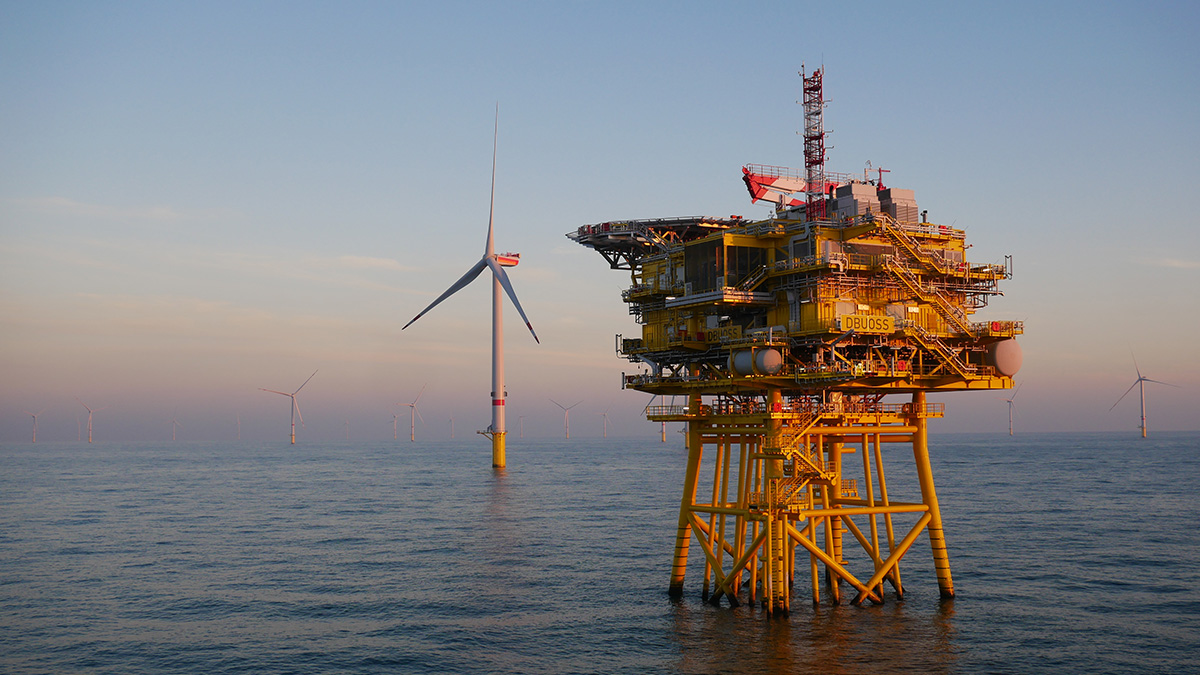
Offshore wind work continues alongside the grid projects. In February, DEME awarded Hellenic Cables a contract for about 70 km of 66 kV inter-array cable for Poland’s BC-Wind project. That came on top of the export cable EPCI contract it already holds there with DEME for Ocean Winds. Production also starts in 2026 for roughly 165 km of inter-array cable for East Anglia TWO in the UK. Onshore, a framework agreement with Dutch grid operator Alliander covers medium- and low-voltage cables from 2026 to 2034.
Cenergy’s management has made its strategy clear. On the H1 2026 earnings call, CFO Ioannis Papachristou named HVDC and subsea transmission as the cable industry’s most attractive profit pool. For Kos and its neighbours, the benefit is more direct: if the 2030 date holds, their power will come from the mainland grid and the island oil plants can close.