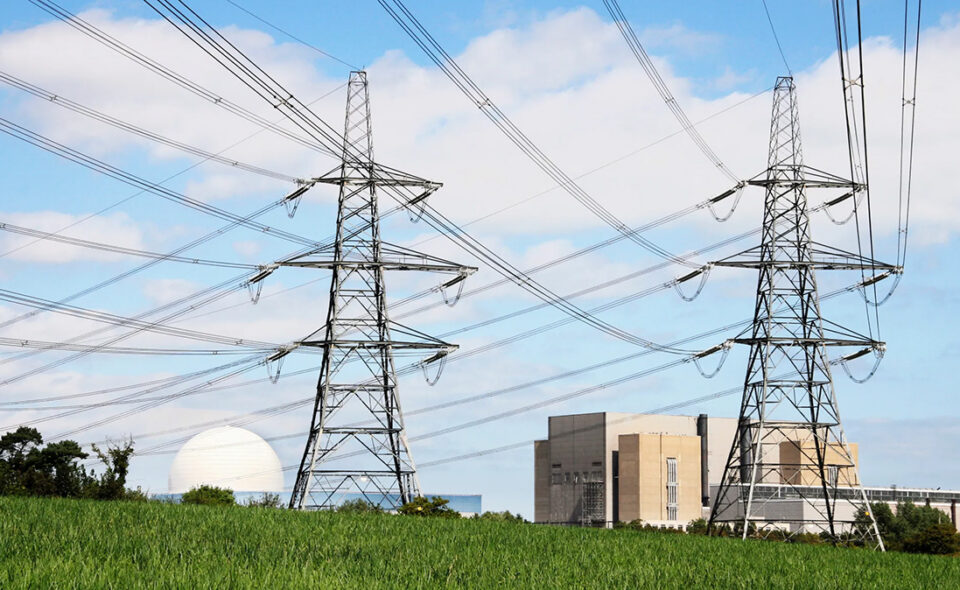
In May 2026, Turkish transmission operator TEİAŞ and Hitachi Energy did something unusual with a new piece of grid infrastructure: instead of simply switching it on, they ran it side by side with a conventional system. On one feeder, a parallel bay was built using process-bus technology to the IEC 61850 standard; next to it, the existing conventional control and protection setup kept running exactly as before. The point wasn’t to prove the new system worked in isolation — it was to compare the two under identical real-world conditions, in the country’s first such pilot. That side-by-side structure is a useful way into what “digital substation” actually means underneath the marketing language, because the two systems look almost identical from the switchyard and differ almost entirely in what happens to the data once it leaves the equipment.
The standard, and the layer beneath it
The starting point for nearly every digital substation is IEC 61850, a roughly two-decade-old international standard that governs how intelligent electronic devices — protection relays, meters, control systems — exchange data within a substation, regardless of which vendor made them. Its most distinctive feature isn’t the wire protocol itself but Substation Configuration Language (SCL), an XML-based, machine-readable description of a substation’s devices and data points. Because SCL is machine-readable, software tools can consume it directly and generate large parts of an engineering design automatically, rather than an engineer building it by hand for every device on site — a point worth returning to later, because it’s where a lot of the standard’s practical value actually shows up.
But IEC 61850 on its own is only half the picture. The physical transformation — the part that lets a utility tear out copper — happens at a layer called the process bus, and the device that makes it work is easy to overlook: the merging unit.
What a merging unit actually does
A merging unit sits close to the switchyard, wired directly to conventional or non-conventional current and voltage transformers. Its job is to take their analogue output, convert it into precisely time-stamped digital measurements, and publish those measurements onto a fibre-optic Ethernet network as Sampled Values (SV) — typically 4,800 samples per second for protection-grade accuracy. Any protection relay, meter, or monitoring system that needs that measurement simply subscribes to the multicast stream, rather than having a dedicated copper pair run to it individually.
That single change is what produces the headline numbers vendors quote: Hitachi Energy’s figure of up to 80% less copper cabling, and Burns & McDonnell’s independently cited 70%, both trace back to this one substitution — one merging unit and one fibre run doing what previously required a separate hardwired connection to every downstream device. Time-critical binary signals, such as a trip command between protection relays, travel over a companion protocol called GOOSE (Generic Object Oriented Substation Event), which is built for latency in the low milliseconds rather than continuous measurement streams.
Because control and protection equipment now consumes only digital data, it no longer needs analogue-to-digital conversion hardware built in — it can run as software on standard computing hardware, much like any other network-connected application. That’s the technical basis for a claim that sounds like marketing but is fairly literal: a modern protection relay is, functionally, a specialised computer subscribing to a data feed.
The sensor that changed shape to fit the network
Feeding that network well requires rethinking the sensor, not just the wiring, which is where non-conventional instrument transformers (NCITs) come in. Rather than the iron-core current and voltage transformers substations have used for a century, NCITs typically use Rogowski coils for current measurement and electric-field probes for voltage — both of which output signals naturally suited to digitisation and neither of which suffers from the magnetic saturation or ferro-resonance effects that limit conventional transformers’ accuracy at high currents or harmonics. Research published through IEEE Smart Grid puts the practical benefit at a 5–10% reduction in size and weight within gas-insulated switchgear bays, alongside a useful engineering simplification: because current and voltage sensing use similar underlying technology, a single hardware design can often serve both, where conventional installations need two entirely separate transformer types.
Turning a data model into a working control room
This is where the machine-readable half of IEC 61850 pays off. COPA-DATA’s zenon platform, used across a range of European and international substation projects, connects to IEC 61850 devices as both an MMS client — polling and controlling any vendor’s intelligent electronic devices — and a GOOSE publisher and subscriber, participating directly in protection-signal exchange rather than only monitoring it from a distance. Because a device’s SCL file already describes its full data model, zenon can import that file and generate large parts of the human-machine interface automatically: displays, alarms and logic that would otherwise be built by hand, device by device. COPA-DATA credits this automatic configuration with cutting HMI engineering time by up to 90% on large, standardised projects — the concrete payoff of SCL being a language software can read, not just a format engineers file away.
The same idea, taken a step further, is what a Horizon Europe project called ESTELAR is now testing in laboratories in Spain and the Netherlands: rather than just automating the interface on top of physical hardware, ESTELAR — coordinated by Spain’s CIRCE research centre with partners including Siemens Nederland, Delft University of Technology and Dutch distribution operator Stedin — is developing virtualised, digital-twin-based substation architecture, running from 2025 to 2027. If SCL-driven HMI automation is digital substations learning to configure themselves, this is the logical next step: substation functions that can be tested, and eventually run, as software before a single piece of switchgear is installed on site.
Why the comparison in Turkey mattered
Which brings the story back to that parallel feeder outside Ankara. What TEİAŞ and Hitachi Energy were really testing wasn’t whether a merging unit can convert an analogue signal accurately — that’s been proven in laboratories and thousands of installations worldwide. It was whether the whole stack — merging units, process bus, GOOSE, and the software consuming all of it — performs reliably under exactly the same real-world conditions as the system it’s meant to replace, without a controlled test environment to hide behind. Reported early results pointed to improved data quality and shorter decision times, which is precisely what the technology is designed to deliver — evidence, running quietly alongside a conventional bay, that a genuinely different way of building a substation now behaves like an ordinary one.