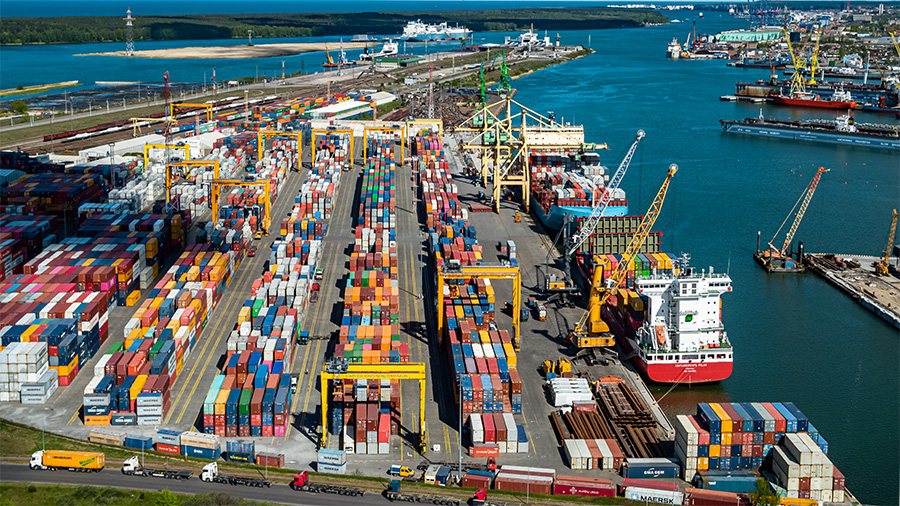
Klaipėda’s cruise terminal was built for one job: waving holidaymakers onto Baltic Sea liners. It’s now being rebuilt for a second one — docking NATO warships. That single stretch of quay captures what’s happening across the whole port: Lithuania’s biggest harbour is being rewired to do double duty as a defence asset and a clean-energy hub, and the European Investment Bank has just put €100 million behind it.
The loan covers up to half of a roughly €201 million works programme, with the balance coming from the EU, Lithuania’s national budget and other institutional financing. The EIB expects the works to wrap by the end of 2027. Karl Nehammer, the bank’s vice-president, called it a project that “directly contributes to the missions of supporting European security and cohesion, while aligning with the green transition” — which is really the whole thesis of the scheme in one sentence.
The military piece is the more striking of the two. Parts of the civilian cruise terminal will be adapted to NATO specifications so it can take allied naval vessels alongside passenger ships, giving the alliance more logistical depth in a corner of Europe that badly needs it. Klaipėda sits close to the Suwałki Gap, the narrow land corridor wedged between Russia’s Kaliningrad exclave and Belarus that is the only route connecting the Baltic states to the rest of NATO territory by land. A port that can reinforce that link by sea, rather than relying solely on that corridor, is a meaningful hedge.
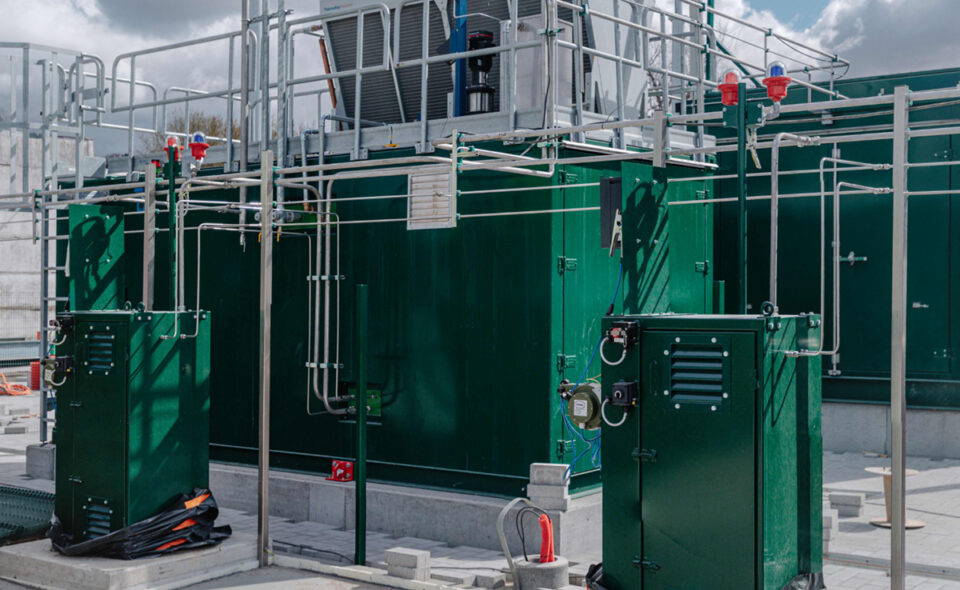
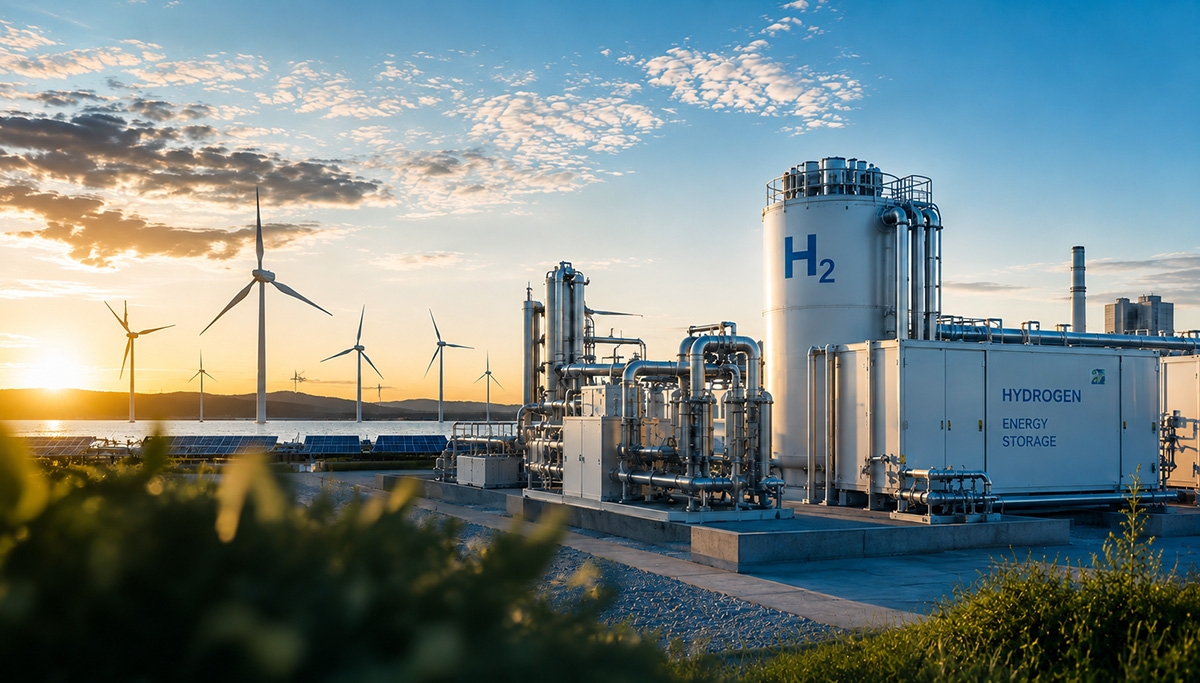
The energy side is less dramatic but arguably further along. Klaipėda already opened Lithuania’s first green hydrogen production and refuelling facility in June, a 2.25-megawatt electrolyser capable of producing up to 127 tonnes of hydrogen a year — for now mostly for the port’s own operations, with commercial sales planned once certification comes through. The EIB financing extends that work with shore power for ferries so they can cut engines at berth, more low-emission port vessels, and upgraded quays built to handle the assembly and storage of offshore turbine components. That last piece matters because Lithuania is aiming for roughly 1.4 gigawatts of offshore wind capacity near Palanga by 2035 — enough to cover close to half the country’s current electricity demand — and something has to physically stage the turbines before they go in the water. Klaipėda, sitting inside the EU’s core TEN-T transport network, is positioning itself as that staging ground.
Algis Latakas, director general of the Klaipėda State Seaport Authority, framed the financing agreement as central to “the port’s development,” delivering “key projects that are shaping the future of Klaipėda Port.” It’s a fairly restrained way of describing an unusual bet: that a single piece of infrastructure can serve NATO’s defence planners, Lithuania’s climate targets and its passenger ferry timetable without any one job crowding out the others.
Whether that bet pays off will show up less in the financing announcement than in how the port actually gets used once the concrete is poured — whether a hydrogen bunkering berth and a NATO frigate really do end up sharing the same stretch of quay without friction. For now, Klaipėda has bought itself the option to try.
Port of Klaipeda team is set to attend the following event: