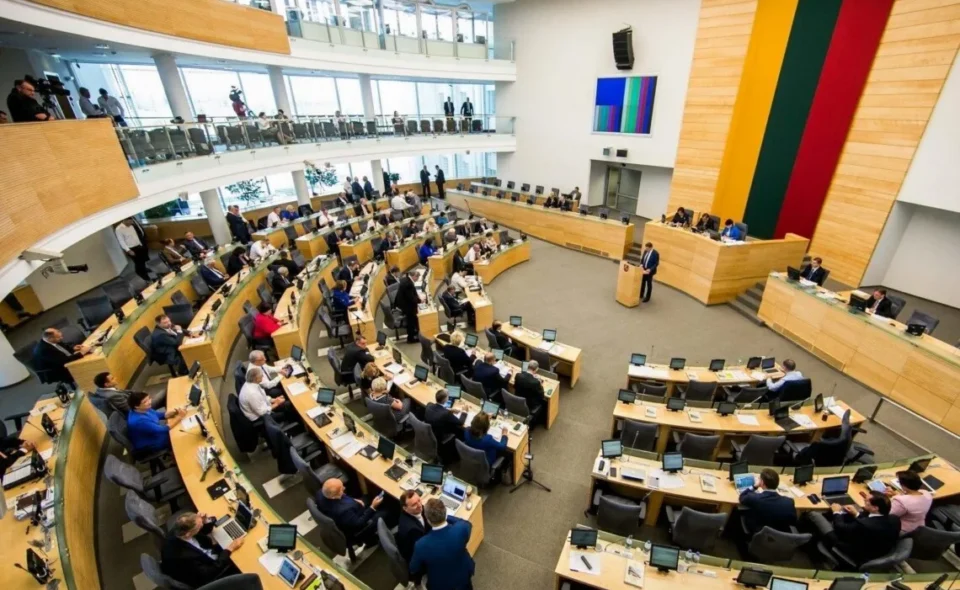
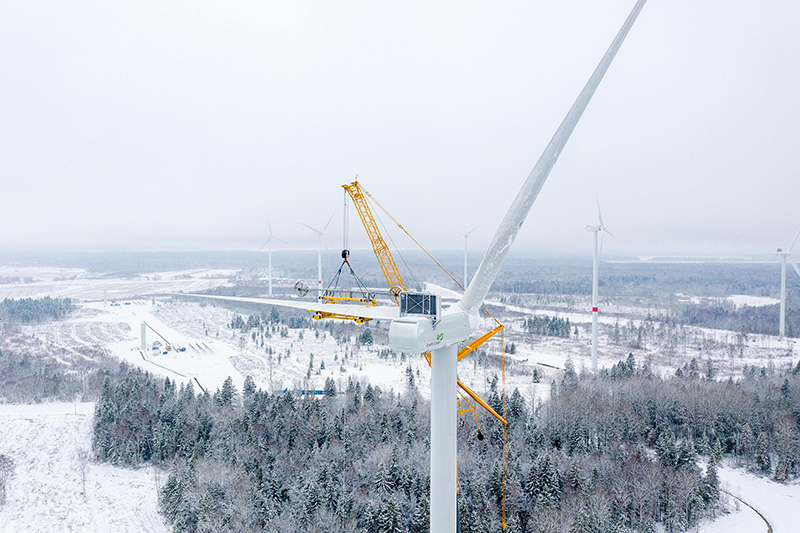
Latvia’s Cabinet of Ministers rejected developer SIA K2 Ventum’s proposed wind park near Pāvilosta on 25 August 2026, citing unresolved legal questions over building in the Baltic Sea and Gulf of Riga coastal protection zones, a lack of repeated public consultation, and objections from residents and the municipality over landscape impact, bird migration, tourism, beach noise, and property values. The project, planned for Saka parish in Dienvidkurzeme Municipality, called for 46 turbines with a projected annual output of 1,038 GWh — substantially larger than two other wind farms the government approved in the neighboring Kurzeme region in April 2026, the 20-turbine Eko Ziemeļi project (536 GWh/year) and the 21-turbine Kurzeme project (up to 661 GWh/year).
The rejection came despite an admission from Latvia’s Ministry of Climate and Energy that the government itself missed a legal deadline in handling K2 Ventum’s application: the company submitted its request on 31 October 2025, triggering a 30-day statutory decision window, but the Cabinet did not first review the project until 28 April 2026 — and even then postponed a final decision, only rejecting it outright four months later.
The ministry acknowledged the delay increased litigation risk but argued the missed deadline didn’t obligate approval, stating that “the deadline’s non-observance itself does not grant K2 Ventum rights to a positive decision.” Economics Minister Viktors Valainis was more openly critical of the process, calling the rejection “an administrative act, not a political decision” that “lacks sufficient justification” — a rare instance of a sitting minister publicly questioning his own government’s Cabinet decision.
Agriculture Minister Uldis Augulis argued the opposite position, saying Latvia “needs such large projects that will ensure significant investments,” and Riga Technical University professor Dagnija Blumberga warned that if courts or the government keep finding legal grounds to block wind projects, the country will have to reconsider its reliance on existing thermal generation such as Riga’s TEC-2 plant.
K2 Ventum board member Agris Kalniņš said the company “performed everything per regulations” and that the developer intends to pursue legal action against the state, with potential damages claims reaching €120 million.
That €120 million figure looks strikingly large next to K2 Ventum’s actual financial footprint. According to the company’s own annual report, as cited in Latvian commentary on the decision, K2 Ventum has invested roughly €805,000 in the project to date and holds registered share capital of just €2,800. One Latvian commentator argued the gap between that modest sunk cost and the nine-figure damages claim is itself the story: since the project never advanced to the construction or investment-heavy stage — no construction project has been developed, no construction costs incurred — the claimed damages appear designed to pressure the government’s decision-making rather than reflect losses the company could plausibly substantiate in court.
Whether a Latvian or international tribunal would ultimately accept anything close to €120 million in damages for a project that spent under a million euros in five years of development remains untested; K2 Ventum has not yet filed suit as of this writing.
The dispute sits inside a broader pattern in Latvia’s coastal wind development: this was already K2 Ventum’s second brush with rejection, having been sent back for further consultation once before, in April 2026, over the same coastal buffer-zone placement concerns that ultimately killed the project outright. By contrast, the two smaller, less contested Kurzeme wind farms approved in that same April 2026 decision faced comparatively muted local opposition — suggesting that scale and site location, not opposition to wind power as such, are what separated the approved projects from K2 Ventum’s.