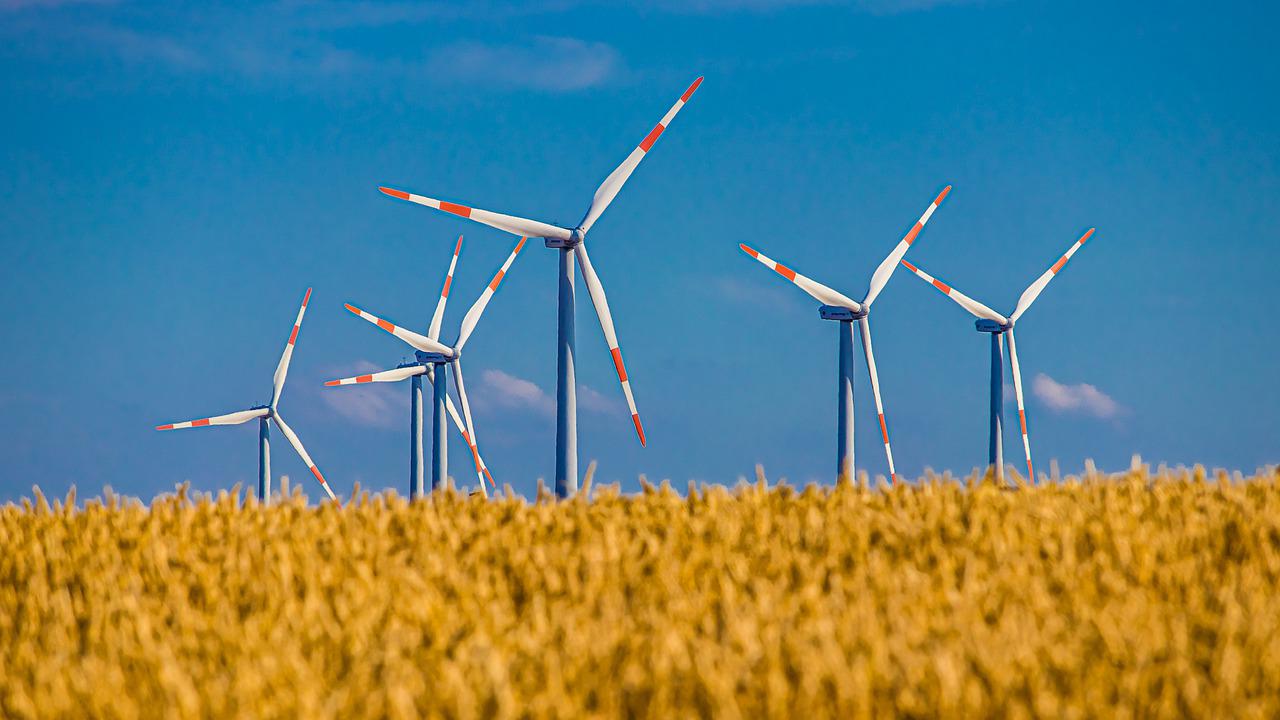



For years, discussions about Romania’s energy transition focused on a familiar challenge: how quickly the country could deploy new renewable generation.
Today, a different question is emerging.
As solar capacity expands, coal generation declines and electricity systems become increasingly complex, attention is shifting towards a less visible but arguably more important issue: flexibility.
This is where battery energy storage systems (BESS) enter the picture.
Romania’s storage market has evolved rapidly over the past two years. What was once considered a niche technology has become one of the most closely watched segments of the country’s energy sector. Operational battery capacity has surpassed 1 GWh, utilities are developing large-scale projects, international investors are entering the market and policymakers are increasingly recognising storage as a critical component of the future electricity system.
Yet the most interesting aspect of Romania’s battery boom may not be the batteries themselves.
Rather, it is what their rapid deployment reveals about the country’s evolving economic and energy landscape.
A Renewable Success Story Creates New Challenges
Romania is experiencing one of the fastest renewable energy expansions in Central and Eastern Europe.
Following years of relatively modest activity after the first renewable investment cycle of the early 2010s, solar development has accelerated dramatically. More than 2 GW of new solar capacity was installed during 2025 alone, pushing the country’s total installed solar fleet beyond 7 GW. Numerous additional projects are either under construction or advancing through development pipelines.
The growth is being driven by a combination of factors. European decarbonisation policies, access to financing through the Modernisation Fund, improving solar economics and increasing investor confidence have all contributed to a surge in deployment.
This expansion strengthens energy security, reduces emissions and lowers dependence on imported fuels.
However, every energy transition creates new challenges.
As larger volumes of solar generation enter the system, electricity production becomes increasingly concentrated during daylight hours. Periods of high renewable output can place pressure on electricity markets, transmission infrastructure and balancing mechanisms. At the same time, demand patterns continue to peak during morning and evening periods when solar production is lower.
The issue is no longer whether Romania can generate enough renewable electricity.
The issue is whether the system can use that electricity efficiently when and where it is needed.
The Flexibility Challenge
Historically, flexibility was provided primarily by conventional generation assets.
Coal, gas and hydroelectric facilities could adjust output to respond to fluctuations in demand and maintain grid stability. As renewable penetration increases, the nature of that challenge changes.
Electricity systems must increasingly manage variability rather than simply generate additional power.
Battery storage is emerging as one of the most effective tools available to address this problem.
Unlike traditional generation assets, batteries can absorb electricity during periods of excess supply and release it during periods of higher demand. They can also respond within seconds to system imbalances, making them particularly valuable for balancing markets and ancillary services.
The importance of these capabilities grows as renewable deployment accelerates.
Romania is now reaching a stage where flexibility is becoming just as important as generation capacity itself.
In many respects, this represents the next phase of the country’s energy transition.
From Pilot Projects to Infrastructure
The most significant development in Romania’s storage sector is that batteries are moving from concept to execution.
Until recently, much of the market consisted of announcements, feasibility studies and early-stage development plans. Today, that picture is changing rapidly.
Operational battery storage capacity exceeded 1.1 GWh by early 2026, with hundreds of additional megawatt-hours under construction and several gigawatt-hours progressing through development pipelines.
Major utilities are now actively investing in storage infrastructure. Hidroelectrica’s plans for a 64 MW / 256 MWh battery project at Iron Gates II represent a notable example of how storage is becoming integrated into the country’s broader electricity infrastructure strategy.
Private developers are moving at scale as well. International investors and energy companies are securing grid connections, acquiring development portfolios and establishing long-term positions in the market.
The result is a sector that is transitioning from experimentation to deployment.
This distinction matters.
Emerging technologies often attract attention because of their potential. Infrastructure attracts investment because it solves real-world problems.
Romania’s battery sector is increasingly falling into the second category.
Why Investors Are Paying Attention
Battery economics have improved significantly across Europe over the past several years.
Technology costs have fallen, operational experience has increased and electricity markets are creating new opportunities for flexible assets.
Romania offers several characteristics that make it particularly attractive.
The country is expanding renewable generation at a pace that increases demand for flexibility services. Electricity price volatility remains sufficient to create opportunities for energy arbitrage. Balancing and ancillary service markets continue to evolve. European funding mechanisms are helping support investment across the energy sector.
At the same time, battery projects are benefiting from growing confidence among lenders and infrastructure investors.
This does not mean the market is without risk.
Revenue uncertainty remains a key consideration. As more batteries enter operation, competition for balancing revenues is likely to intensify. Investors must carefully evaluate assumptions regarding market saturation, asset utilisation and long-term profitability.
The most successful projects are unlikely to depend on a single revenue stream.
Instead, operators are increasingly focused on revenue stacking, combining wholesale trading, balancing services and ancillary market participation to improve overall project economics.
This approach reflects a broader reality.
Battery storage is becoming a sophisticated infrastructure business rather than a straightforward renewable energy investment.
Grid Constraints Are Creating Additional Value
Transmission infrastructure remains one of the most important long-term challenges facing Romania’s energy sector.
The country’s renewable resources are not always located close to major centres of electricity consumption. At the same time, project development activity is accelerating faster than many network reinforcement programmes can be completed.
This creates congestion risks and connection challenges.
Traditionally, these issues would be addressed primarily through transmission expansion. New transmission infrastructure will undoubtedly remain essential.
However, storage is increasingly being viewed as a complementary solution.
Batteries can help absorb excess generation, reduce local congestion and improve utilisation of existing network assets. In certain situations, they can provide flexibility much faster than large-scale transmission projects can be delivered.
As a result, storage is becoming an important component of broader grid modernisation efforts rather than simply a technology deployed alongside renewable generation.
The Bigger Story Is Demand
Most discussions about battery storage begin with renewable energy.
The more important conversation may be about electricity demand though.
Across Europe, governments are competing to attract investment in advanced manufacturing, digital infrastructure and strategic industries. These sectors increasingly depend on access to reliable, affordable and low-carbon electricity.
Romania is well positioned to participate in this trend.
The country offers competitive renewable resources, a strategic geographic location and growing energy infrastructure capabilities. Data centres, advanced manufacturing facilities, industrial electrification projects and new technology sectors all have the potential to increase electricity consumption significantly over the coming decade.
If that happens, the role of storage changes fundamentally.
Batteries cease to be merely tools for integrating renewable energy.
They become enabling infrastructure for economic growth.
Reliable electricity systems are a prerequisite for industrial competitiveness. As electricity demand becomes more dynamic and increasingly dependent on renewable generation, flexibility becomes a strategic economic asset.
In this context, battery storage supports far more than decarbonisation.
It supports investment, productivity and industrial development.
Looking Beyond the Headlines
Battery storage is often presented as one of the newest segments of the energy transition.
In reality, it may be better understood as a response to a much larger structural shift.
Romania’s electricity system is becoming more renewable, more decentralised and more interconnected. At the same time, the country’s economy is likely to become increasingly dependent on electricity as industries electrify and digital infrastructure expands.
These trends are creating demand for flexibility on a scale that did not previously exist.
The rapid growth of battery storage is therefore not simply a technology story.
It is a reflection of how Romania’s energy system is evolving.
The coming decade will determine whether the country can convert its growing renewable resources into a broader competitive advantage. Success will depend not only on how much electricity Romania can generate, but also on how effectively it can store, manage and deploy that electricity across its economy.
That is why the battery boom matters.
And it may be why the real story has only just begun.
Author: Derek Michalski, Editor