Author: Derek Michalski, Chief Editor.
Europe is committing billions to new reactors as data centres, electrification and AI drive electricity demand higher. But most of the new nuclear capacity will not arrive until the mid-2030s or later, by which time Europe could have substantially more renewable generation, storage, interconnection and demand-side flexibility. The investment question is no longer whether Europe needs more electricity, but how much firm capacity it will actually need.
The data-centre boom changes the question
Europe is entering a period of rapidly rising electricity demand after more than a decade in which consumption was broadly stagnant. Data centres, particularly those supporting artificial intelligence, are one of the most visible sources of this increase, but they are not the only one. Electrification of transport and heating, industrial decarbonisation, hydrogen production and new electricity-intensive manufacturing are all adding load.
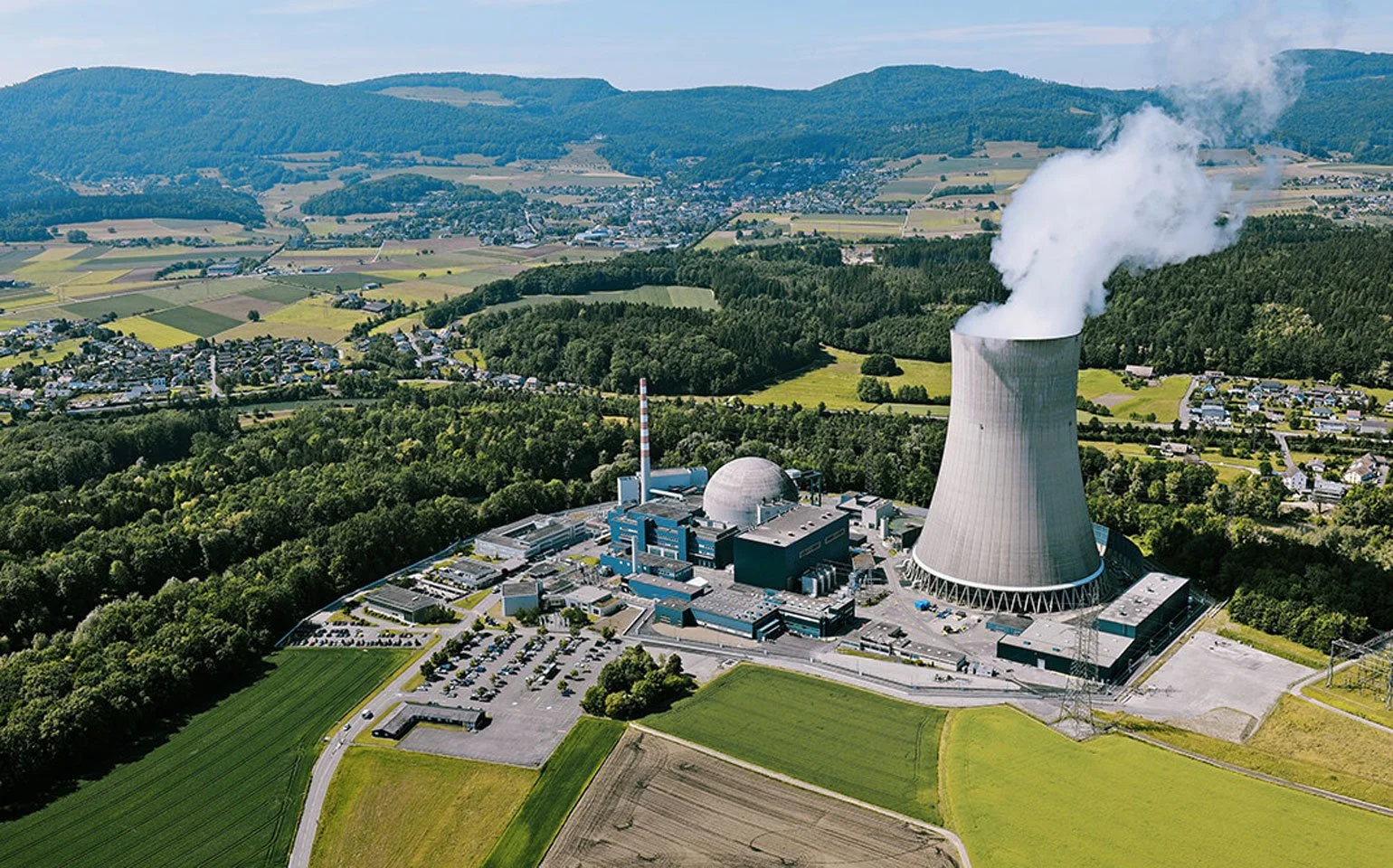
The response is already visible in government policy. After years of nuclear phase-out or limited new-build activity, several European countries are now committing to new reactors. France is preparing a new generation of EPR2 units. Czechia has contracted KHNP to build two APR1000 reactors at Dukovany. Poland is constructing three AP1000 reactors and preparing a second nuclear project. Britain is proceeding with Sizewell C and developing Rolls-Royce SMRs, while Sweden has selected Rolls-Royce SMR for a proposed three-unit project.
The obvious interpretation is that Europe has rediscovered nuclear because it needs more electricity. That is only partly correct.
The more difficult question is whether these reactors will still represent the most economic way of meeting Europe’s electricity-system requirements when they finally enter operation.
A reactor ordered today will compete not with the European power system of 2026 but with the system of 2035–2045. By then, the continent could have hundreds of additional gigawatts of solar and wind capacity, substantially more battery storage, stronger interconnection, more demand-side flexibility and significantly reinforced transmission and distribution networks.
The nuclear investment decisions therefore have to be judged against a system that has not yet been built.
Renewable deployment is changing the baseline
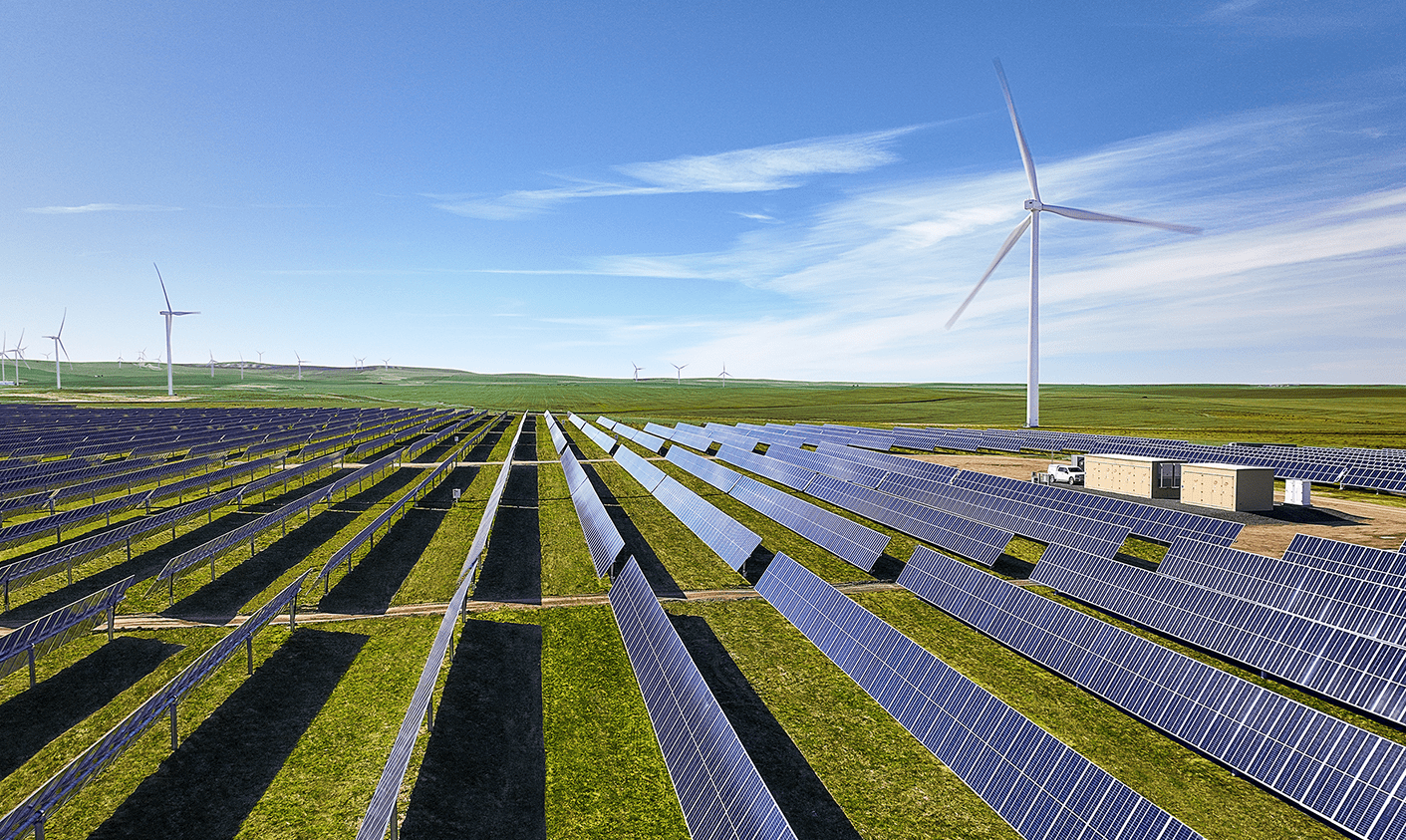
The renewable build-out is already moving faster than nuclear construction. The IEA expects more than 400 GW of net renewable capacity additions in the EU between 2026 and 2030, with solar accounting for around 70% of those additions. By 2030, wind and solar are expected to provide around 46% of EU electricity generation, while renewables overall reach approximately 63%. The IEA expects renewables to meet essentially all additional EU electricity demand through 2030.
This is important for the nuclear debate because it changes the nature of the problem. Europe does not necessarily need nuclear because it cannot generate enough annual energy. Solar and wind can supply enormous quantities of additional MWh, and they can be deployed much faster than a large nuclear plant.
A hyperscale data centre requiring 500 MW within the next several years illustrates the difference. A combination of new renewable generation, grid reinforcement, storage and contracted capacity can potentially be developed within the relevant investment cycle. A new 1.6 GW nuclear reactor cannot. Its development, licensing, financing, construction and commissioning take considerably longer.
The speed advantage therefore belongs to renewable generation and, increasingly, storage.
The harder issue is capacity adequacy.
Europe can have enough energy and still lack capacity
A power system with very large quantities of solar and wind does not necessarily suffer from an annual energy deficit. It can instead suffer from insufficient generation during particular periods.
This distinction is fundamental.
When solar output is high and wind generation is strong, Europe could increasingly have more electricity available than the system can absorb economically or physically. The consequences will be more frequent periods of very low or negative wholesale prices, renewable curtailment and congestion on parts of the transmission network.
The difficult periods occur when renewable output is low. A cold winter evening with limited solar production and several days of weak wind can produce a high residual load even when annual renewable generation is more than sufficient to cover demand.
That is a capacity-adequacy problem rather than an energy-adequacy problem.
It is also where nuclear retains a strong system role. A nuclear reactor provides firm low-carbon capacity that is largely independent of weather conditions. Its value is therefore not simply the annual volume of electricity it produces but its contribution to meeting demand during periods when variable renewable generation is insufficient.
That distinction will become increasingly important as Europe’s renewable penetration increases.
Data centres do not automatically make nuclear necessary
It would therefore be wrong to conclude that the AI boom necessarily requires nuclear generation.
Data centres require high levels of electricity availability and power-quality performance, but those requirements can be met through different combinations of generation, storage, network capacity and contractual arrangements. The IEA expects renewables to provide a substantial share of the additional electricity required by data centres globally through 2035, while grid investment and storage provide increasing flexibility.
There is also potential flexibility within the computing load itself. Not all AI workloads have identical latency requirements, and some computational tasks can potentially be geographically distributed or shifted in time. This does not make a hyperscale data centre equivalent to an electrolyser or industrial battery, but it means that some of the demand created by AI could eventually respond to electricity-system conditions.
That could become economically significant.
If large computing loads can be scheduled to coincide with periods of abundant renewable generation, they could become a source of demand-side flexibility rather than simply another source of inflexible demand.
The more flexibility that can be extracted from demand, the less firm generation has to be built solely to cover relatively infrequent system peaks.
The nuclear investment case becomes more difficult as renewable penetration rises
This creates a particular problem for large nuclear projects.
A large reactor requires enormous upfront capital expenditure and then operates for several decades. Its economics are strongest when it achieves a high capacity factor and receives sufficient revenue over its operating life to recover that initial investment.
But a power system with rapidly increasing solar and wind penetration will increasingly experience periods in which electricity has very low marginal value.
That does not mean nuclear becomes uneconomic. It means its economic value changes.
A new nuclear reactor may increasingly be valuable because it provides firm capacity during periods of high residual load rather than because its electricity is needed during every hour of the year.
That distinction matters because conventional wholesale electricity markets are generally better at valuing energy than long-term capacity adequacy.
If a nuclear project is required primarily to ensure electricity availability during relatively infrequent periods of system stress, some form of capacity remuneration, long-term contract or other revenue mechanism may be required.
The economics therefore cannot be assessed solely through LCOE.
A €X/MWh nuclear plant and a €X/MWh solar plant do not provide the same system service. The relevant comparison has to incorporate capacity value, profile, flexibility requirements, network requirements and the cost of integrating additional generation.
Existing nuclear may be more valuable than new nuclear
This uncertainty strengthens the case for extending the operating lives of existing reactors.
An existing nuclear plant has already absorbed the largest part of its capital expenditure. Its grid connection already exists, the site is established, the operating workforce is in place and the regulatory framework is mature. If the reactor can continue operating safely and economically, a lifetime extension can provide additional firm low-carbon capacity much sooner than a new-build project.
That is strategically important during the period in which Europe is attempting to determine the ultimate role of nuclear in its future electricity mix.
Czechia is extending the operating lives of its existing nuclear fleet while adding new capacity at Dukovany. France continues to pursue long operating lives for its existing reactors. Other European countries that previously planned nuclear closures are reconsidering the timing of those shutdowns.
From a system-planning perspective, lifetime extensions provide something new nuclear cannot: additional firm capacity without waiting a decade or more for construction.
They also reduce investment risk. Europe does not need to decide today exactly how much nuclear capacity it will require in 2045 in order to preserve reactors that are already operating.
SMRs could provide a different investment model
The emerging SMR programmes are interesting precisely because they potentially address some of the uncertainty surrounding large nuclear projects.
A conventional reactor in the 1–1.7 GW range represents a very large commitment. An SMR of several hundred megawatts can potentially be deployed in smaller increments and matched more closely to the development of a particular industrial or data-centre cluster.
If electricity demand grows much faster than expected, additional units could theoretically be added. If demand growth is weaker, the system does not have to commit to the same volume of capacity.
That is attractive in a market where future electricity demand is highly uncertain.
But the proposition depends on standardisation and serial production delivering lower capital costs and shorter construction schedules. Europe has not yet demonstrated this at commercial scale.
A 400–500 MW reactor that costs almost as much per MW as a large reactor does not provide much economic flexibility. The first European SMRs therefore matter less for their immediate contribution to generation than for what they will demonstrate about the economics of repeat construction.
Until that happens, projected SMR capacity should not be treated as equivalent to an established nuclear pipeline.
Europe could eventually overbuild firm capacity
This is a risk that deserves more attention.
Europe spent years worrying about insufficient generation capacity. It could now move into a period in which it has to manage the opposite problem: too much generation capacity of certain types and insufficient capacity of others.
The continent is simultaneously planning large volumes of solar and wind, batteries, transmission, interconnection and new nuclear generation. If renewable deployment and flexibility develop faster than expected, the residual requirement for new firm generation could be substantially smaller by 2040 than current nuclear investment programmes assume.
That would not make nuclear redundant. A system dominated by variable renewable generation still requires firm capacity during periods of low renewable output.
But the required quantity becomes a system-optimisation question.
How much nuclear is required after accounting for hydro, interconnection, long-duration storage, batteries, demand response, flexible industrial loads and dispatchable generation?
That is the question that should determine nuclear investment, rather than an assumption that rising electricity demand automatically translates into a proportional requirement for nuclear capacity.
France, Poland and Czechia have different nuclear economics
There is no single European answer.
France has a substantial existing nuclear fleet and a large requirement to replace ageing reactors. Its case for new nuclear is therefore stronger than that of a country starting from a predominantly renewable system.
Poland faces a different problem. It is replacing a coal-dominated generation fleet while electricity consumption is expected to rise. Its nuclear programme therefore combines decarbonisation, security of supply and system adequacy.
Czechia is also pursuing a combination of lifetime extensions and new nuclear capacity.
Countries with stronger renewable resources, extensive interconnection and different demand profiles may reach a different conclusion.
The same applies to locations attracting hyperscale data centres. A region expecting several gigawatts of additional load may have a very different capacity-adequacy calculation from a region where electricity demand is broadly stable.
Data centres could become participants in generation investment
The scale of the new loads also raises a financing question.
A hyperscale data-centre campus can require several hundred megawatts of electricity and operate for decades. Its operator therefore has a direct economic interest in ensuring that sufficient firm generation and network capacity exist.
That could eventually move hyperscaler procurement beyond conventional renewable PPAs.
Long-term power contracts, capacity commitments or direct equity participation could provide additional revenue certainty for generation projects, including nuclear. In principle, the companies creating some of the fastest-growing electricity demand could help finance the infrastructure required to meet it.
This would change the allocation of investment risk. Instead of consumers and governments carrying the full cost of a nuclear project whose future market value is uncertain, some of that risk could be transferred to the companies requiring firm electricity.
Whether hyperscalers will make commitments of that scale remains uncertain. But the possibility becomes increasingly relevant as individual data-centre developments approach the scale of major industrial loads.
The nuclear renaissance is real. Its scale is not yet clear.
Europe is unquestionably returning to nuclear. France, Britain, Poland, Czechia and Sweden are all moving beyond general political support towards concrete projects. This does not mean Europe is returning to the electricity system of the twentieth century, in which nuclear provided a dominant share of centrally dispatched generation.
The more plausible system is one in which renewable generation supplies most annual electricity, while nuclear provides a significant quantity of firm low-carbon capacity. Batteries, transmission, interconnection, demand response, flexible industrial loads and other technologies will manage increasing volumes of variable generation.
The unresolved question is the optimal balance.
That is why the data-centre boom does not provide a straightforward justification for building more nuclear. It provides a justification for accelerating investment in electricity supply and networks. Nuclear is one option within that investment programme, but its value has to be assessed against the system Europe is actually building.
By the time the first new European reactors begin producing electricity in the mid-2030s, the continent could have a radically different generation mix from today’s. Solar and wind capacity could be several times higher, battery deployment could be measured in hundreds of gigawatt-hours, interconnection could be stronger and demand-side flexibility could be much more sophisticated.
The nuclear projects now being approved therefore represent a bet on the future electricity system.
That bet may prove correct. Europe may discover that periods of low renewable output and rising electrification make large quantities of firm low-carbon capacity indispensable.
But it may also discover that it needs fewer new reactors than currently assumed because renewable generation, storage, grids and flexible demand have developed faster than expected.
For energy investors, utilities and governments, that is the central issue. Europe does not simply need more electricity. It needs the right combination of energy, capacity, flexibility and network infrastructure at the lowest system cost.
The data-centre boom makes that calculation more urgent. It does not make the answer any simpler though
EVENT ALERT: