Twice in the same week in Vienna, the same Lithuanian official had to switch registers entirely. At the IAEA’s 70th General Conference, deputy energy minister Gabrielius Gorbačevskis stood up to describe robots crawling through the guts of a reactor that has never been taken apart before anywhere on earth. Then he stood up again to complain that a nuclear plant 50 kilometres from Vilnius won’t tell anyone what keeps going wrong with its equipment. One message was about mastering an unprecedented engineering problem. The other was about a neighbour Lithuania doesn’t trust to run a much simpler one. Both were delivered by the same government, in the same room, in the same breath — and that’s not really a coincidence.
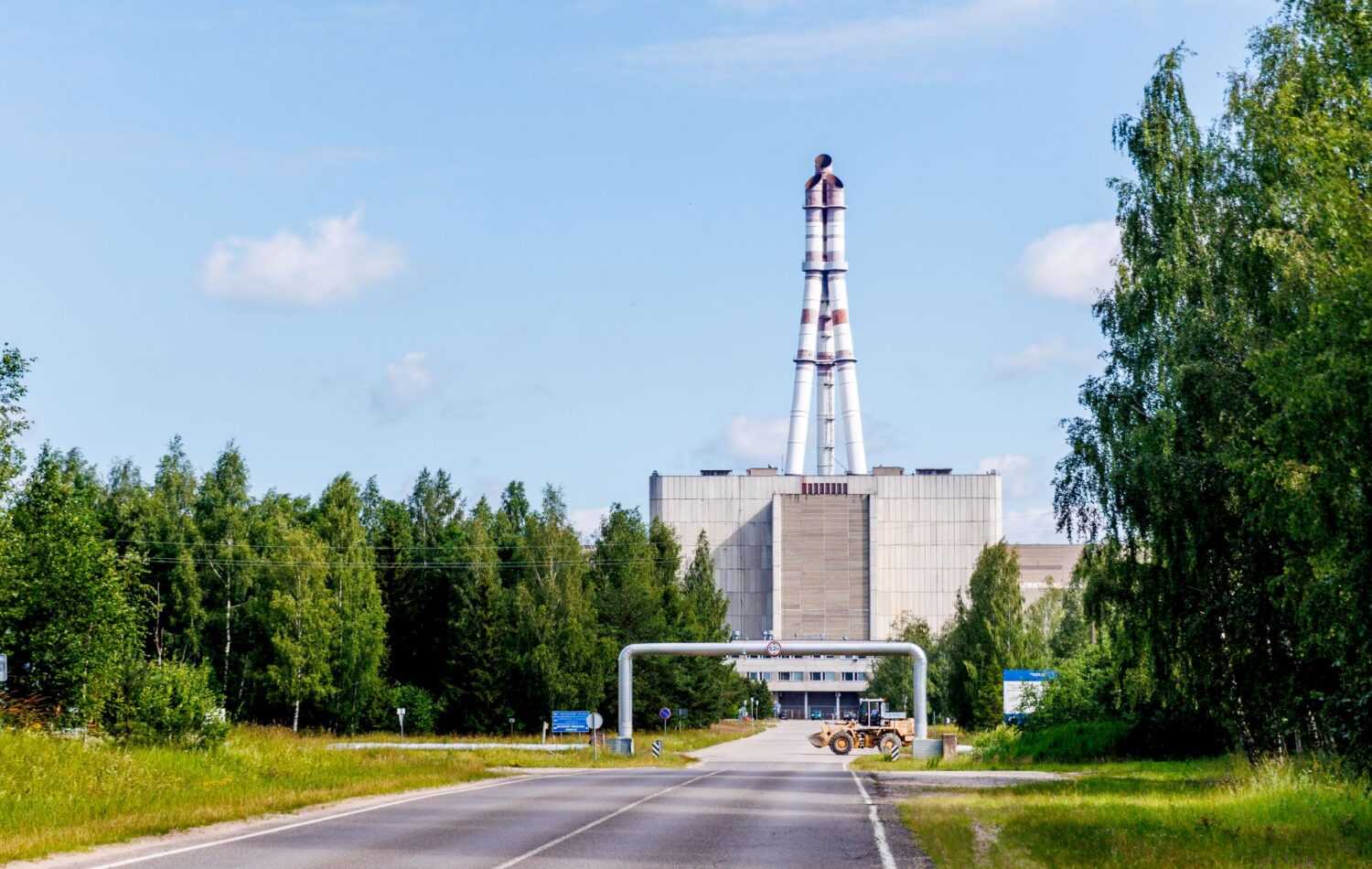
The first story is Ignalina, and it is genuinely without precedent. The plant’s two RBMK-1500 reactors share their design lineage with Chernobyl, and Lithuania agreed to shut them down as the price of EU membership — the last one went dark in 2009. What’s happened since is less a demolition than a very slow, very careful surgery: each reactor core contains more than 2,000 individual channels that once held fuel, control rods and cooling lines, all now intensely radioactive and mostly inaccessible to anyone in a normal set of protective gear. Contractors including Westinghouse subsidiaries are now dismantling the plant’s eight steam drum separators — cylinders roughly three metres across and thirty metres long, weighing over 6,000 tonnes between them — largely by remote and robotic means. As of mid-2026, around 83,400 tonnes of equipment had come out, a little under half the total. Lithuania’s regulator, VATESI, reports the project has run without a serious incident and that radiation releases sit at roughly 1% of the annual public dose limit, corroborated by independent dosimeters placed across a 50-kilometre radius.
None of that came cheap or on schedule. The whole project is now budgeted at more than €2.5 billion, funded almost entirely — about 95% — by other EU member states through a dedicated decommissioning fund, with Lithuania covering the rest. Early official language pointed to wrapping up around 2038; more recent projections put full core removal in the early 2040s and total decommissioning closer to 2050. Tellingly, the IAEA’s own expert mission to Ignalina this year didn’t hand out a certificate of good progress so much as a warning: build a realistic cost and schedule baseline, the mission advised, rather than one more hopeful timeline. Even the country holding itself up as a model has had to admit, in public, that its own past estimates were fiction.
That’s the calling card Lithuania brought to Vienna: an unglamorous, expensive, slower-than-promised but apparently safe demonstration that a Soviet-designed reactor can be taken apart without anyone getting hurt. It’s also the credibility Lithuania spends immediately on its second message, about a plant it didn’t build and doesn’t control.
Astravets sits inside Belarus, about 50 kilometres from Vilnius, and it is everything Ignalina is not: new, operating, and expanding. Its two VVER reactors — built by Russia’s Rosatom and financed by a Russian loan covering roughly 90% of the original $6.1 billion contract — came online in 2020 and 2023. The construction record was rockier than Belarus liked to admit. In 2016, a reactor pressure vessel fell during transport; Belarusian officials eventually agreed to replace it rather than risk using a component that had taken an unexplained hit, adding months to the schedule. When the European Parliament formally called for the plant’s commercial launch to be suspended in February 2021, its resolution cited a longer pattern still: four separate transformer failures, malfunctioning cooling equipment, and eight distinct incidents during construction, two of them involving the reactor vessel itself. “Nuclear safety is about complete compliance with all highest technical and legal requirements,” said Petras Auštrevičius, the Lithuanian MEP who served as Parliament’s rapporteur on Belarus at the time — not a hedge, but a direct statement that Astravets, in his committee’s view, wasn’t meeting that bar.
Lithuania had already acted unilaterally by then. Its parliament declared the plant a security threat in 2017 and, in December 2019, passed a law — 88 votes to 2 — blocking companies from securing licences to import electricity generated at nuclear plants that fail international safety standards, aimed squarely at Astravets. It hasn’t been a fully united regional front: Latvia and Estonia both declined to join the boycott, weighing their own energy needs more heavily than Vilnius’s objections, which rather undercuts any tidy story of a unified Baltic bloc standing firm against a rogue neighbour. What hasn’t gone away is the underlying complaint, restated almost word for word at this year’s conference: Belarus won’t share information about equipment failures, and it’s pressing ahead with a third reactor — approved in November 2025, with Rosatom aiming to sign the construction contract before 2027 — without first closing the gaps regulators and MEPs have been flagging for the better part of a decade.
Put the two stories side by side and the pattern is less about nuclear physics than about what counts as evidence of trustworthiness. Lithuania’s pitch on Ignalina isn’t just “we’re good at this” — it’s “we let you watch us be good at this,” inviting IAEA missions, publishing dose data, admitting when its own schedules were wrong. Its complaint about Astravets isn’t really that accidents happen during construction of a nuclear plant, which they sometimes do everywhere; it’s that Belarus won’t show its work. A government that has spent seventeen years letting inspectors crawl over its own dismantling project has a specific kind of standing to ask why its neighbour won’t do the same with a plant that’s actually running.
Whether that standing changes anything in Minsk is another matter. Belarus has shown no interest in the transparency Lithuania keeps asking for, and a third reactor is coming regardless. But international forums like the IAEA’s General Conference aren’t really where problems like that get solved — they’re where reputations get set, one national statement at a time. Lithuania’s has become, whether by design or by necessity, the story of a country dismantling the reactor that used to frighten it in order to earn the right to say, plainly, that it isn’t yet convinced by the one still running next door.