Author: Derek Michalski, Chief Editor.
Artificial intelligence is changing far more than the digital economy. It is rapidly becoming one of the most significant drivers of electricity demand, forcing utilities, transmission system operators and data centre developers to rethink how critical infrastructure is powered.
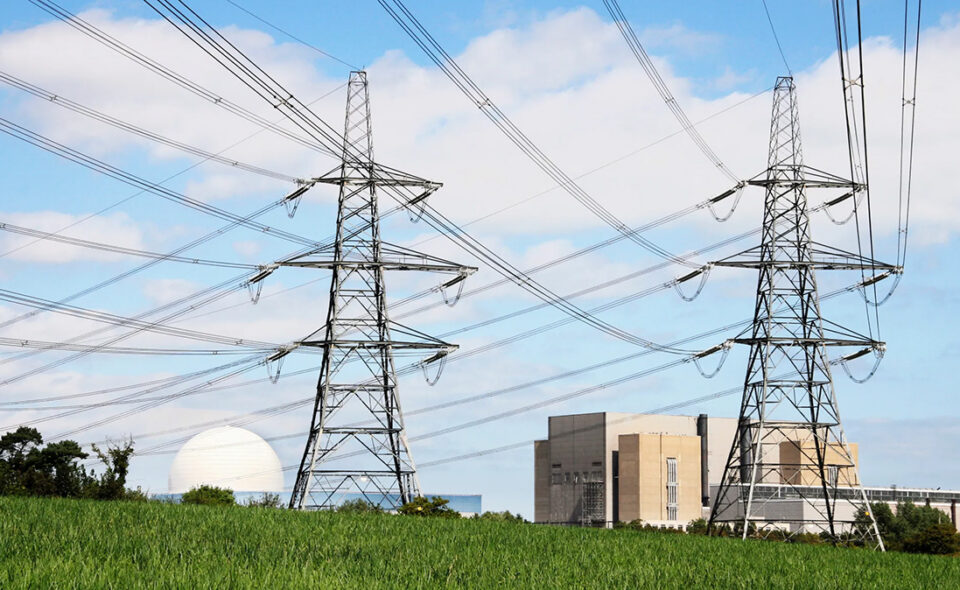
For decades, the relationship between data centres and the electricity grid was relatively straightforward. Facilities connected to the public network, installed uninterruptible power supplies (UPS) and diesel generators to provide emergency backup, and relied on the resilience of the grid to deliver continuous power. That model is now under increasing strain.
The scale of modern AI infrastructure is unprecedented. Individual hyperscale campuses are being designed with power requirements of 100 MW, 300 MW and, in some cases, more than 1 GW. Securing grid connections for facilities of this size has become one of the greatest challenges facing the digital infrastructure sector. Across Europe and North America, developers are encountering lengthy connection queues, transmission constraints and increasing uncertainty over when sufficient capacity will become available.
Rather than waiting years for network reinforcements, some developers are beginning to adopt an entirely different approach: building their own power systems.
This concept, known as intentional islanding, has the potential to transform not only how data centres operate, but also how electricity systems are planned and managed.
What is islanding?
In electrical engineering, islanding occurs when part of an electricity network continues operating independently after becoming disconnected from the wider grid.
Historically, islanding was regarded as an undesirable condition. If distributed generators continued supplying electricity following an unexpected network outage, they could create safety risks for utility workers and complicate system restoration. As a result, anti-islanding protection became a standard requirement for renewable energy installations.
Today, the industry is taking a very different view.
Advances in battery energy storage, grid-forming inverters and sophisticated energy management systems mean that carefully designed microgrids can intentionally disconnect from the transmission network while maintaining stable voltage and frequency internally. Instead of representing a fault condition, islanding has become an effective resilience strategy for critical infrastructure.
For data centres, where even a few seconds of power interruption can result in significant financial losses, the concept is attracting considerable attention.
From emergency backup to independent power systems
Traditional data centre electrical architecture has changed remarkably little over the past two decades. Electricity is supplied by the grid, UPS systems provide immediate protection against short interruptions, while diesel generators assume the load during prolonged outages.
This approach remains highly reliable, but it has important limitations.
Backup generators are designed to operate only occasionally. They require regular maintenance, depend on fuel deliveries during extended emergencies and provide little operational flexibility. Most importantly, they do nothing to address the growing problem of insufficient grid capacity.
The next generation of data centres is evolving into something fundamentally different.
Instead of treating on-site generation as emergency equipment, developers are integrating gas engines, combined heat and power plants, battery energy storage, renewable generation and advanced control systems into continuously operating microgrids. These systems can function in parallel with the public network during normal conditions while retaining the capability to disconnect and operate autonomously whenever required.
The data centre effectively becomes its own miniature power system.
Europe takes its first step
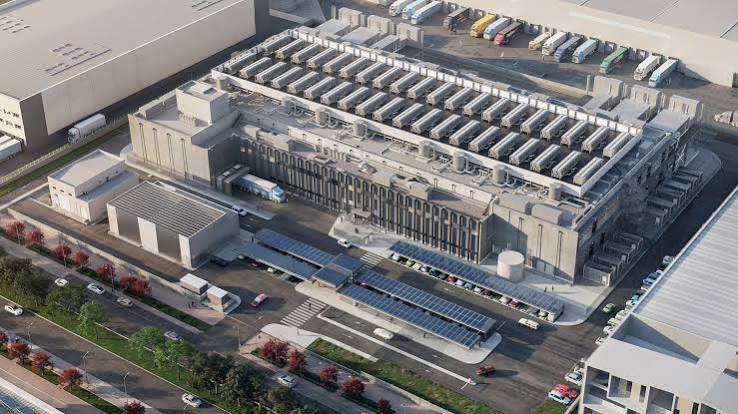
The most significant European example to date is located in Dublin, where Pure Data Centres has commissioned what is widely recognised as Europe’s first large-scale island-capable data centre microgrid.
The project illustrates how quickly the energy landscape is changing.
Ireland has become one of Europe’s largest data centre markets, but rapid growth has placed considerable pressure on the country’s electricity network. In response, new grid connections have become increasingly difficult to secure, particularly around Dublin where transmission capacity is heavily constrained.
Rather than delaying development until network reinforcement projects are completed, Pure Data Centres adopted a different strategy.
Its new campus incorporates approximately 110 MW of on-site generation, battery storage and sophisticated control systems capable of operating as an integrated microgrid. Initially, the facility can operate independently of the national grid, allowing computing operations to commence without waiting for additional transmission capacity.
Once permanent grid connections become available, the campus is expected to operate as a hybrid system, importing and exporting electricity as appropriate while retaining the ability to transition seamlessly into island mode whenever operational conditions require.
This represents an important milestone for Europe’s digital infrastructure sector. The project demonstrates that islanding is no longer simply a resilience measure but can also provide a practical solution to accelerating data centre development in regions where electricity networks are struggling to keep pace with demand.
The United States is moving even faster
While Europe is only beginning to adopt island-capable data centres, the United States is rapidly embracing behind-the-meter generation on an unprecedented scale.
Electricity demand from AI is growing particularly quickly in states such as Texas and Virginia, where utilities are increasingly challenged by the speed at which new hyperscale facilities require power.
Rather than relying exclusively on traditional grid connections, several developers are investing in large-scale private generation assets incorporating natural gas turbines, reciprocating engines, battery storage and sophisticated microgrid controls.
For many projects, on-site generation is no longer viewed as standby capacity but as an essential component of the primary electricity supply.
The objective is straightforward. By generating electricity behind the meter, developers can reduce dependence on constrained transmission infrastructure, accelerate project delivery and improve operational resilience.
This approach also offers additional commercial opportunities. When connected to the wider network, these facilities may eventually provide balancing services, frequency response and reserve capacity, creating new revenue streams while supporting overall grid stability.
China’s alternative approach
China faces many of the same challenges as Europe and the United States, particularly the rapid growth of electricity demand driven by cloud computing and artificial intelligence. However, its strategy differs significantly.
Rather than focusing primarily on island-capable data centres, China has invested heavily in relocating computing capacity towards regions with abundant renewable energy resources. Through its national “East Data, West Computing” strategy, major computing facilities are being developed closer to large-scale wind and solar generation, supported by extensive ultra-high-voltage transmission infrastructure.
This approach seeks to optimise the geographical distribution of both renewable generation and computing demand rather than relying extensively on autonomous microgrids.
Nevertheless, Chinese research institutions and equipment manufacturers are investing heavily in technologies that underpin future islanding capability, including grid-forming inverters, battery energy storage, virtual synchronous machines and advanced microgrid control systems.
These technologies are expected to play an increasingly important role as industrial facilities, ports, manufacturing plants and eventually data centres seek greater operational flexibility and energy resilience.
The technologies making islanding possible
Several technological developments have converged to make intentional islanding commercially viable.
Battery energy storage systems provide the rapid response required to stabilise frequency immediately following disconnection from the main grid. They also enable black-start capability, allowing an entire microgrid to restart without relying on external electricity supplies.
Grid-forming inverters represent another major breakthrough. Unlike conventional renewable energy inverters, which require an existing grid voltage reference, grid-forming devices actively establish voltage and frequency, effectively creating the electrical conditions needed for stable autonomous operation.
Sophisticated Energy Management Systems continuously monitor electricity demand, optimise dispatch between different generation sources, manage battery charging cycles and coordinate transitions between grid-connected and island operation without interrupting critical computing processes.
Together, these technologies are transforming microgrids from experimental demonstration projects into commercially attractive infrastructure.
What this means for the electricity sector
The emergence of island-capable data centres has implications extending far beyond digital infrastructure.
For transmission system operators, autonomous campuses could help reduce pressure on increasingly constrained electricity networks by operating independently during periods of system stress.
For distribution network operators, flexible microgrids may simplify local network planning while improving overall system resilience.
Renewable energy developers may benefit from new opportunities to integrate large-scale battery storage and flexible generation with private electricity networks serving major industrial consumers.
Investors are also paying close attention. As electricity becomes one of the defining constraints on AI expansion, energy infrastructure is evolving from a supporting utility into a strategic competitive advantage.
The ability to guarantee reliable electricity may increasingly determine where hyperscale campuses are built and how quickly they can enter operation.
A new chapter in energy resilience
The growth of artificial intelligence is forcing a fundamental reassessment of how critical infrastructure is powered.
For many years, resilience meant installing larger diesel generators and more sophisticated UPS systems. The future looks very different.
Tomorrow’s data centres are likely to operate as intelligent energy hubs capable of producing, storing and managing their own electricity while interacting dynamically with the wider grid. During normal operation they will import and export power according to market conditions. During disturbances they will disconnect automatically, maintaining uninterrupted operation while supporting wider system stability.
The implications extend well beyond the data centre industry. As electricity demand continues to accelerate, intentional islanding may become an increasingly common feature of hospitals, ports, airports, manufacturing facilities and other mission-critical infrastructure.
The Dublin project demonstrates that this future has already begun. What was once regarded as an emergency operating mode is rapidly evolving into a new model for powering the digital economy. In an era where access to electricity is becoming as strategically important as access to fibre networks, island-capable microgrids may prove to be one of the defining innovations shaping the next generation of energy infrastructure.