Hydrogen has proved it can power data centres. The question is whether the market still needs it.
Author: Derek Michalski, Editor.
This article is a part of MDVR’s 500 words series.
Artificial intelligence has transformed data centres into one of the fastest-growing sources of electricity demand. New hyperscale facilities are being designed with power requirements measured in hundreds of megawatts, while the largest campuses under development are expected to exceed one gigawatt. As operators race to secure grid capacity and meet increasingly ambitious decarbonisation targets, attention has turned to one of the industry’s least visible – but most critical – assets: backup power.
For decades, diesel generators have been the standard solution. They are reliable, relatively inexpensive and supported by mature fuel and maintenance networks. Most importantly, they perform exceptionally well. In an industry where downtime is measured in millions of dollars per hour, replacing diesel requires more than lower emissions – it requires matching an extraordinarily high standard of reliability.
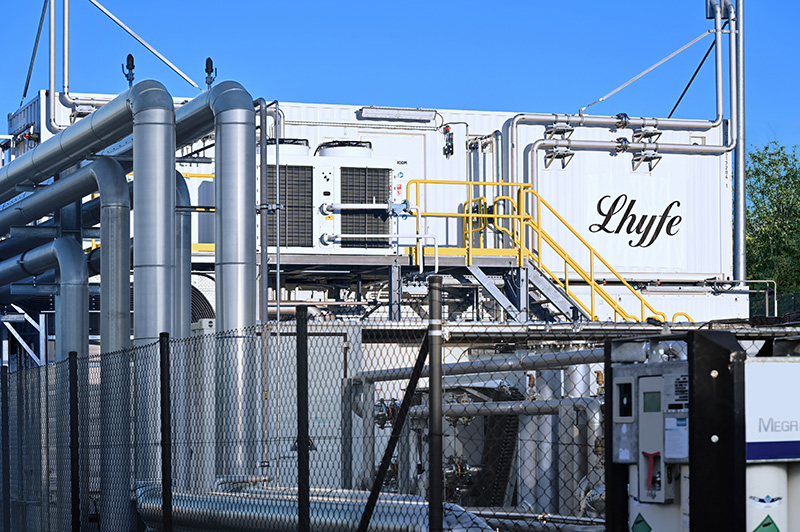
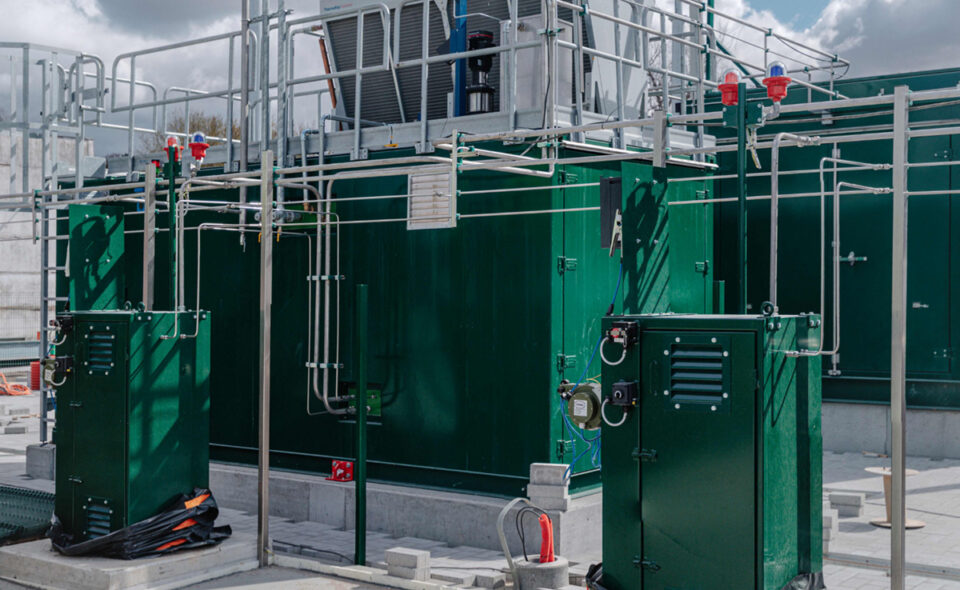
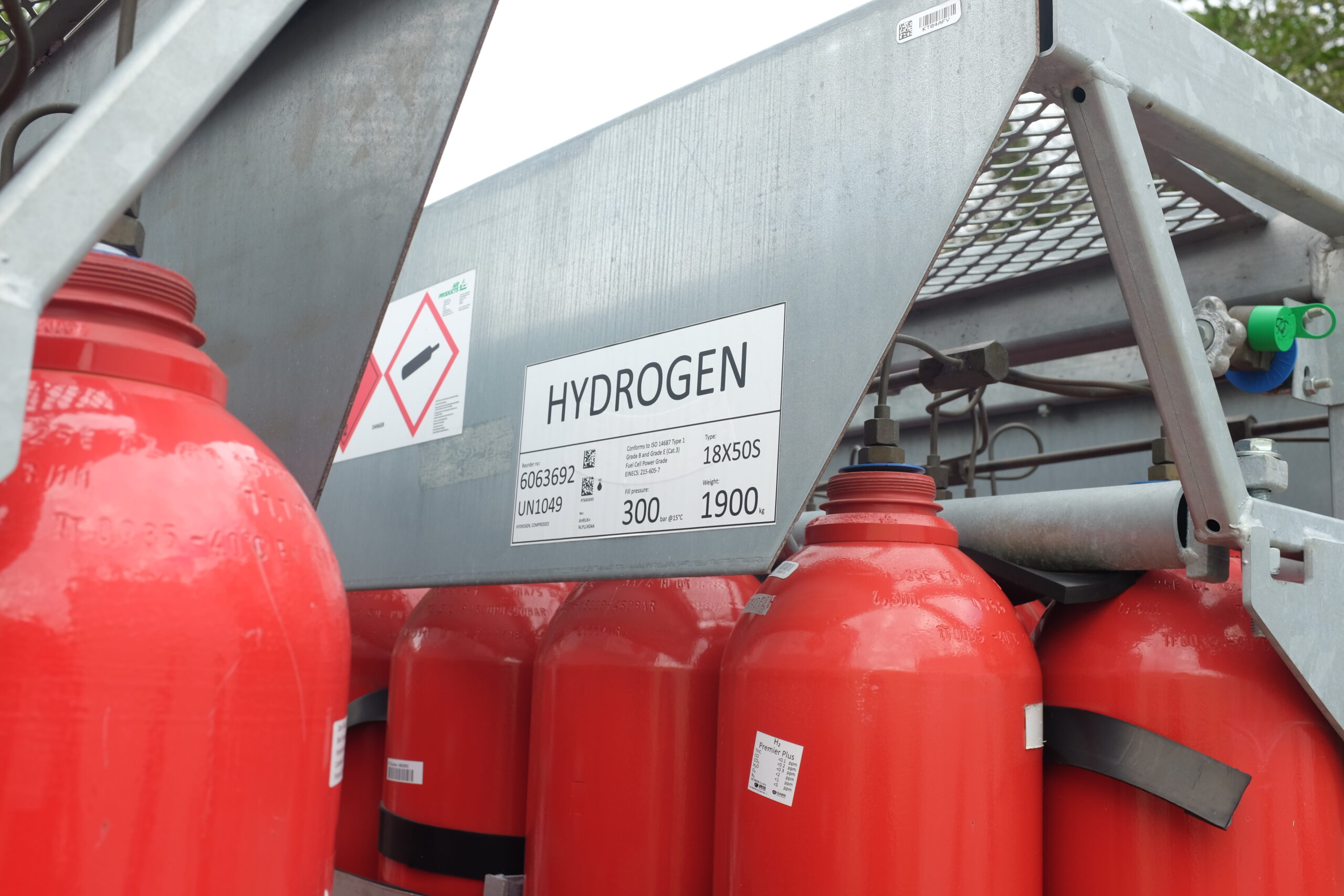
Technically, hydrogen fuel cells have made remarkable progress. In July 2022, Microsoft and Plug Power successfully powered Azure servers for 48 consecutive hours using a 250 kW PEM fuel-cell system, proving that hydrogen could support live computing workloads. In 2023, Microsoft scaled the concept to a 3 MW system, bringing the technology close to the capacity required for commercial data centres. The following year, Microsoft and ESB launched a green hydrogen pilot in Dublin, evaluating hydrogen as a zero-emission alternative to diesel backup generation.
These projects answered an important engineering question: hydrogen fuel cells can reliably power critical data-centre infrastructure.
The commercial picture is less convincing.
In 2025, Equinix expanded its partnership with Bloom Energy beyond 100 MW of installed fuel-cell capacity across multiple US data centres. However, these solid oxide fuel cells operate primarily on natural gas, with hydrogen compatibility planned for the future. The distinction is significant. The market has embraced fuel-cell technology more readily than hydrogen itself.
The next generation of projects tells a similar story. In June 2026, Equinix, ESB and GeoPura began a 12-week trial at the DB3 data centre in Dublin, using hydrogen fuel cells to power critical cooling infrastructure. The project aims to assess whether hydrogen can eventually replace diesel generators. Beyond Ireland, however, the pipeline is remarkably thin. There are no major announced hydrogen-powered data-centre projects in Germany, France, Spain, the Nordic countries, China, Chile or India.
That absence is revealing. Extensive searches across English, German, Spanish and Chinese sources found almost no examples of hydrogen projects failing technically. On the contrary, pilot programmes have generally achieved their engineering objectives. What they have not achieved is commercial scale.
The challenge is not proving that hydrogen works, but proving that it makes economic sense. Most data centres lack hydrogen supply and storage infrastructure, while diesel generators operate only during outages, making fuel costs a relatively small part of lifetime ownership. Capital cost, operational simplicity and proven reliability continue to favour conventional systems.
Meanwhile, the AI boom is reshaping investment priorities. Rather than committing to hydrogen, operators are securing dedicated grid connections, large-scale battery storage, gas-fired generation and, increasingly, nuclear power. Hydrogen remains under evaluation while competing technologies are already being deployed.
Hydrogen has moved beyond the experimental stage, but it has yet to cross the commercial threshold. The next breakthrough will not be another successful pilot – it will be the first hyperscale operator specifying hydrogen fuel cells as standard backup power across a new data-centre portfolio. Until then, “could” remains the most accurate word in the conversation.
EVENT ALERT: