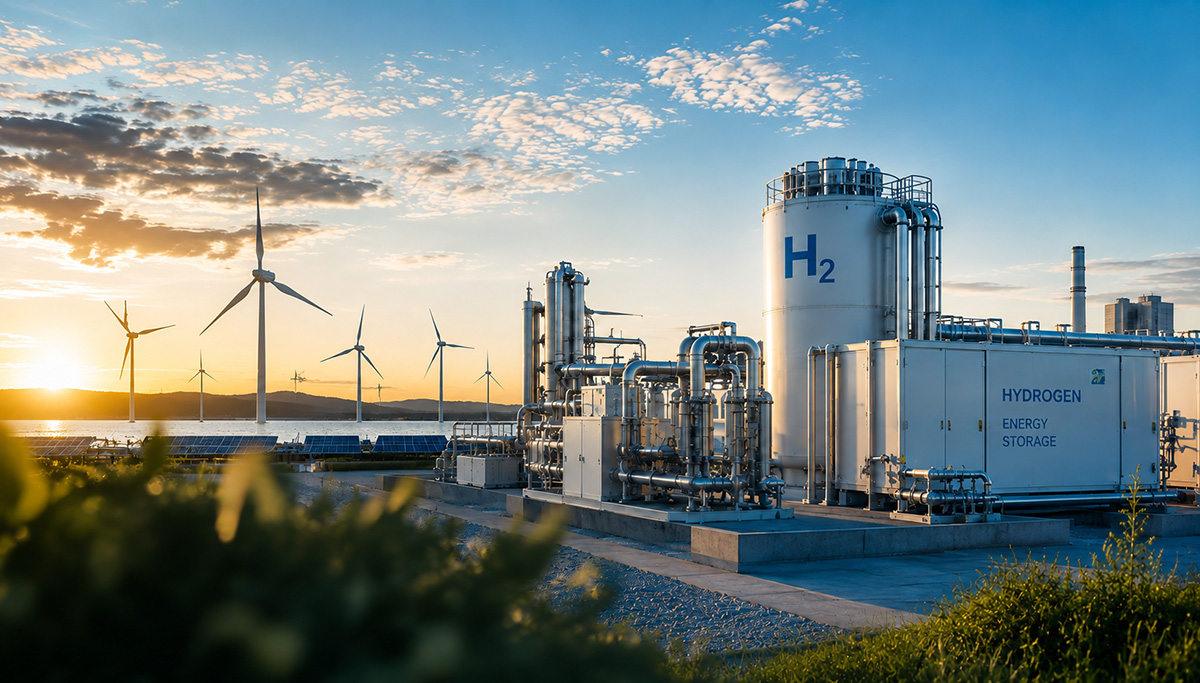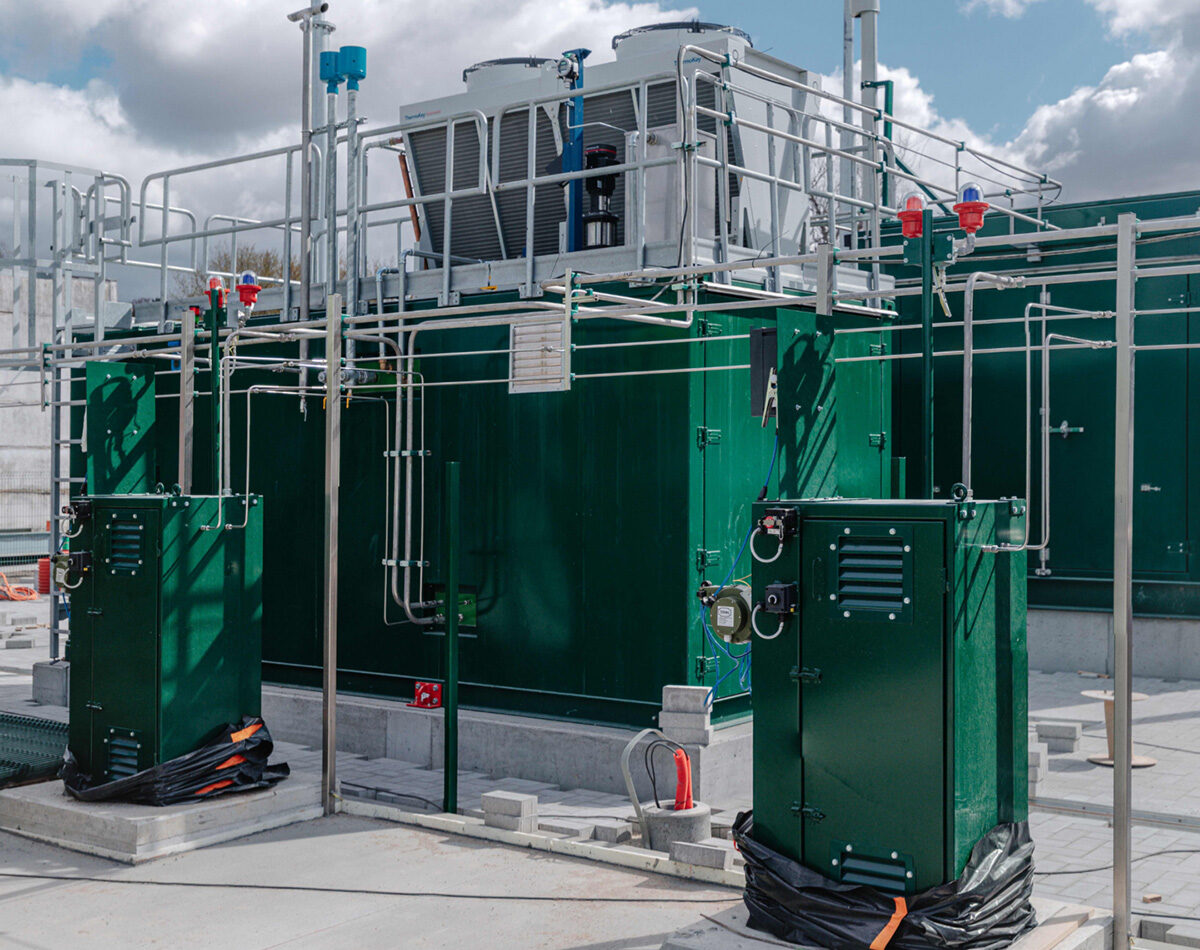
On the grounds of Vilnius’s second cogeneration plant, next to turbines that have heated the city for decades, sits a new kind of machine: a 3-megawatt electrolyzer that splits water into hydrogen and oxygen using only renewable electricity. Construction wrapped this September, testing is underway, and by the end of 2026 the plant is expected to be producing green hydrogen at scale — up to 285,000 kilograms a year. It makes Vilnius the first city in Lithuania producing hydrogen through electrolysis, and it’s the centerpiece of a €10 million bet that hydrogen has a real place in how the city moves people around.
What’s been built
The plant was developed by Miesto gijos, Vilnius’s district heating company (formerly AB Vilniaus šilumos tinklai), with the city as shareholder and MT Group as general contractor. About €5.6 million of the €10 million came from the EU’s Recovery and Resilience Facility, via Lithuania’s Central Project Management Agency; the municipality covered the rest.
Every kilogram produced has to come from renewables and meet 99.99% purity under ISO 14687:2019, the standard for fuel-cell-grade hydrogen. The EU financing requires a minimum of 128,000 kilograms in at least one year across a five-year obligation period, with room to scale toward the 285,000-kilogram ceiling. A neat efficiency touch: waste heat and unusable process water from electrolysis get routed into Vilnius’s district heating network rather than wasted.
A public refueling station is going in at the Viršuliškės transport depot, open eventually to commercial vehicles and private drivers as well as buses, with refueling around nine to ten minutes. Its first customers: 16 hydrogen buses that Vilniaus viešasis transportas (VVT) is adding, part of a wider 161-vehicle zero-emission order (145 electric, 16 hydrogen) worth roughly €101 million. Caetano H2 City Gold buses have already been trialed on routes 10 and 30. VVT director Darius Aleknavičius argues hydrogen suits the toughest routes — buses covering 250–300 km a day don’t have time to sit charging but can spare ten minutes to refuel. The plant could eventually support around 40 buses. Mayor Valdas Benkunskas has tied the project to a 2030 target of getting all public transport off fossil fuels, and the city expects roughly 1,400 tonnes of CO₂ saved annually once the buses are running.
The pushback
Not everyone on the city council is convinced. In March 2025, the Social Democratic faction, led by Povilas Pinelis, pushed to scrap the hydrogen buses, citing costs of roughly €900,000 per bus — nearly double an electric one — and fuel costs above €0.80/km, about triple an electric bus’s running cost. They pointed to Oslo and Vyborg, cities that dropped hydrogen buses over cost and efficiency. Councillor Almantas Stankūnas went further, calling the project a sunk-cost fallacy and estimating hydrogen fuel at more than five times the cost of electricity or biomethane per equivalent distance; he argued swapping the 16 buses for biomethane ones would save about €19.5 million over a decade. In late March 2025 he took the case to the European Court of Auditors and Lithuanian oversight bodies, alleging close to €200 million in wasteful or non-transparent spending across the broader procurement.
The council proceeded anyway with the mixed 145-electric/16-hydrogen order. It reads less like a dismissal of the criticism than a bet that it’s comparing the wrong things — a citywide electric rollout against a narrow hydrogen deployment aimed specifically at the routes electric buses handle worst, kept small enough that a wrong call won’t sink the transport budget.
How this compares elsewhere
Germany is the closest thing to a hydrogen bus success story at scale: 628 fuel cell buses by the end of 2025, up 85% from 339 a year earlier (per electrive.com’s E-Bus Radar), even though battery-electric buses still outnumber them roughly six to one. Cologne runs 127, Rostock 71, and hilly Wuppertal 52 — its utility argues fuel cells recover energy better than batteries on steep climbs, and backed the fleet with its own dedicated refueling station. PwC analysts caution the momentum holds only where cities have locked in reliable, competitively priced hydrogen supply; some German operators are already steering newer orders back to batteries where that’s not secured.
Finland is still at pilot stage. Jyväskylä brought in five CaetanoBus H2 City Gold buses in August 2025, testing them on real routes, and only started installing Finland’s first proper hydrogen refueling station — a 1-megawatt Asahi Kasei electrolysis unit — this spring.
Poland is the cautionary tale. It has roughly 247 hydrogen buses running or contracted across cities including Poznań, Konin, Lublin, Wałbrzych and Piła, but a 2026 CEE Bankwatch Network report found the economics collapsing: in Rybnik, running the hydrogen fleet cost over three times as much as diesel and four times as much as hybrid buses; in Rzeszów, 15-year fuel costs were projected to exceed the buses’ purchase price. Wrocław, Płock and Żory have shifted plans toward electric, and Kraków has scaled back, citing supply uncertainty. Poland built only 9 of a planned 32 hydrogen stations by end-2025, against over 12,500 EV chargers — and an estimated 97% of the hydrogen fueling those buses is still fossil-derived, undercutting the climate case entirely.
That contrast is why Vilnius’s choices look sound. Poland’s buses arrived without secured, affordable, genuinely renewable hydrogen behind them, and the costs caught up with the climate case. Vilnius built the supply first — a renewables-only electrolyzer, sized deliberately small and tied to the routes hydrogen actually suits, closer to Wuppertal’s model than Rybnik’s.
None of this guarantees success; hydrogen buses remain expensive wherever energy prices sit, and the council’s critics have a real point about opportunity cost. But the plant that came online this month gives Vilnius something most cities now regretting their hydrogen bets didn’t have when they committed: a domestic, renewable fuel supply, built before the buses needed it.
Join us at: