
LEAG is the clear winner of Germany’s first long-term capacity auction, and it won by reusing infrastructure its competitors would have had to build from scratch.
The Lusatian generator secured contracts for seven new gas-fired units with a combined 3,680 MW of installed capacity, equivalent to 2,998 reduced megawatts (rMW), in the Bundesnetzagentur’s first tender under the Electricity Supply Security and Capacity Act (StromVKG). Of the eleven contracts awarded today, seven went to LEAG. All of its projects must be operating by the end of 2031 at the latest.
The awards cover three sites. Jänschwalde in Brandenburg gets four units of 560 MW each. Boxberg in Saxony gets two more of the same size. Leipheim in Bavaria, where LEAG has run a grid-stability gas turbine plant since 2023, gets a new 320 MW plant on developed industrial land next door. Every unit is designed to switch to hydrogen later.
The numbers explain the scale of the win. Add LEAG’s 2,998 rMW to RWE’s roughly 2,100 rMW and two companies hold more than the 4,500 rMW the round put out to tender. Across 41 bids totalling almost 12 GW, the average award price came in at around €155,000, against a ceiling of €244,000 per megawatt of reduced capacity per year. LEAG says the Bundesnetzagentur confirmed its own award values sit well below that ceiling.
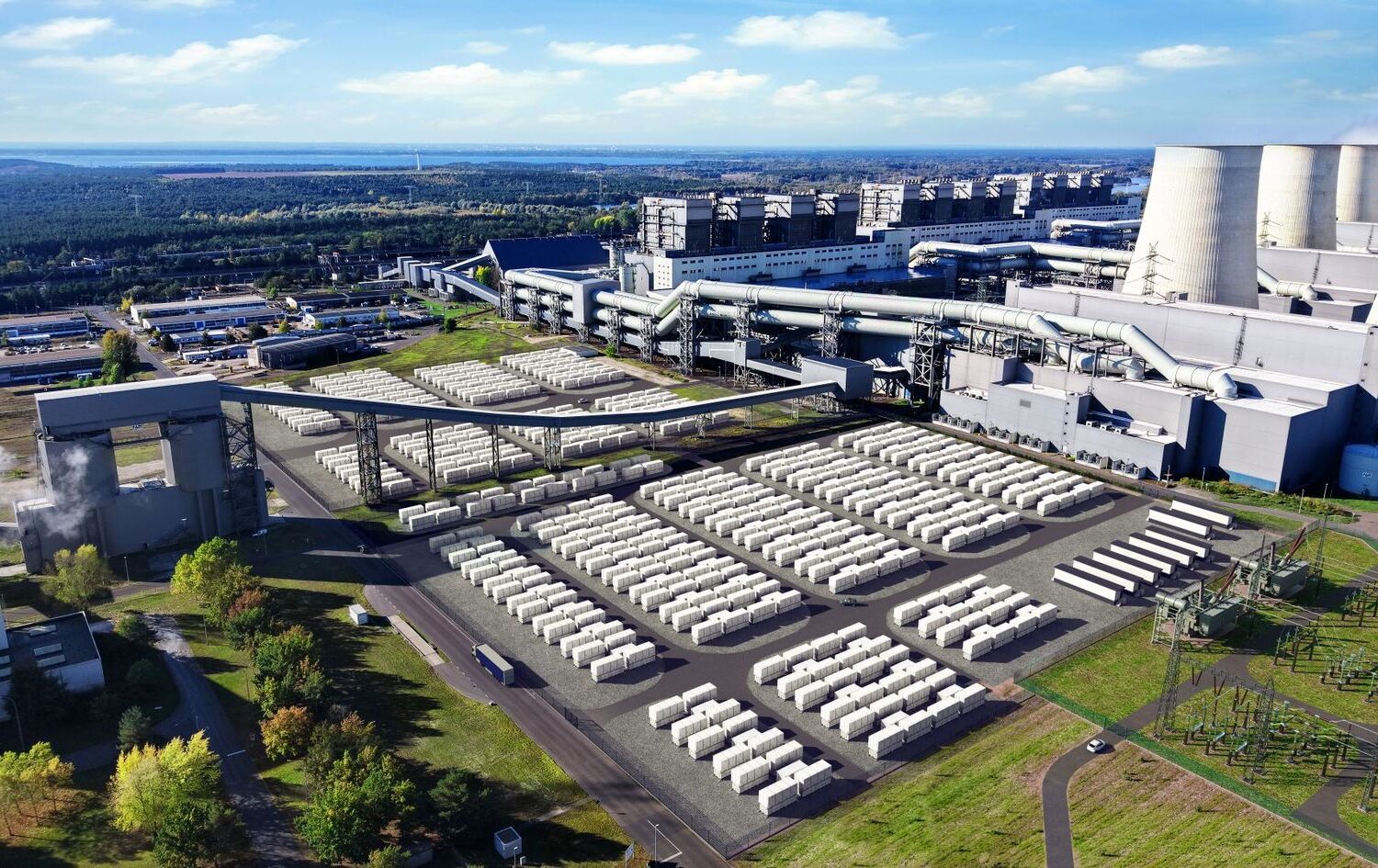
The reason is LEAG’s FuelSwitch concept. At Jänschwalde and Boxberg, the new gas units go onto existing lignite sites and use the grid connections already there. Some buildings and technical components can also be folded into the new plants. That cuts material requirements, lowers costs and shortens delivery times. In an auction that ranks bids on cost per megawatt over 15 years, brownfield reuse becomes a pricing weapon. “We are building new, modern power stations at existing sites,” said chief executive Adi Roesch.
LEAG puts its total investment at around €1.5 billion to €2 billion. That works out at roughly €400,000 to €550,000 per installed megawatt across the portfolio, a figure developers on greenfield sites will study closely.
There is a political dimension as well. Lusatia faces the end of lignite, and the new plants let LEAG keep experienced staff working at familiar sites as the region’s coal units close. Group works council chair Silke Rudolf said the projects secure skilled jobs beyond the coal exit and show the federal government keeping its promise of long-term prospects for the region.
LEAG plans to run the new capacity alongside the renewables and batteries in its GigawattFactory portfolio, with the gas units covering periods when wind and solar fall short. Leipheim is the strategic outlier: it takes LEAG’s power plant business beyond its eastern German heartland and into the south.
For the losing bidders, the first round has delivered a lesson. Sites with grid connections already in place cost less, and the auction design rewards bidders who have them. The Bundesnetzagentur announces the second 4.5 GW round on 10 November.